Priced Out, But Not Silent: How Displacement Is Changing the Music Your City Makes
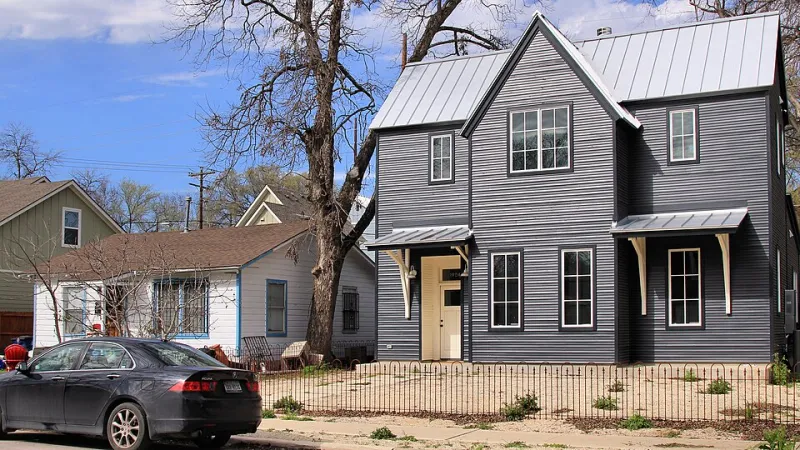
Photo: Larry D. Moore, CC BY 4.0, via Wikimedia Commons
There's a particular kind of quiet that settles over a block after the last longtime tenant packs up and leaves. It's not peaceful. It's the sound of something being erased. And in cities across the country right now, that erasure is happening to entire neighborhoods that once functioned as the beating creative heart of a local music scene.
You can track gentrification through a lot of metrics — median home prices, coffee shop density, the sudden appearance of $18 cocktails where a dive bar used to be. But one of the least-discussed casualties is sonic. The music a city makes is deeply tied to where its people live, how they gather, and what they're feeling. When those people get priced out, the sound changes. Sometimes it dies. Sometimes it mutates into something entirely new.
The Studio on the Corner That Isn't There Anymore
Ask any working musician in a major metro area and they'll name a specific address. A basement in a neighborhood that's now full of condos. A rehearsal space above a laundromat that's now a co-working loft. A block where three or four producers used to live within walking distance of each other, trading beats and ideas across backyard fences.
That kind of proximity is not incidental to how music gets made — it's foundational. Genres don't emerge from algorithms. They emerge from communities of people who share physical space, cultural reference points, and economic realities. When you scatter those people across suburbs and satellite cities, you don't just displace residents. You disrupt a creative ecosystem that took decades to develop.
Darius Whitfield has been producing hip-hop and R&B in his city for over fifteen years. He grew up in a neighborhood that's now being marketed as an "arts district" — a label that arrived, he notes, right around the time the original artists started leaving.
"There's real irony in that," he says. "They're selling the aesthetic of what we built, but the people who built it can't afford to be here anymore. The murals are still up. The vibe is still being marketed. But the actual musicians? We're forty-five minutes away now."
Darius relocated his home studio to a suburb two years ago. His commute to sessions in the city has more than doubled. More critically, the spontaneous collaboration that defined his earlier work — the 2 a.m. knock on the door, the impromptu session that turned into a breakout track — has largely evaporated.
"You can't recreate that on Zoom," he says flatly. "Community is proximity. When you remove the proximity, you change what gets made."
What the Sound Becomes
Displacement doesn't kill creativity. That's an important distinction. What it does is redirect it — and that redirection leaves marks on the music itself.
Historically, some of the most significant genre evolutions in American music have been born directly from forced migration. The Great Migration reshaped the blues into soul, gospel, and eventually rock and roll. The displacement of Black and Latino communities in postwar urban renewal projects helped seed the conditions for hip-hop. Music has always metabolized pain and movement.
What's happening in cities today is a continuation of that pattern, even if the forces driving it are different. Artists pushed to the periphery are making music that reflects the peripheral experience — longer commutes, fractured community ties, the exhaustion of being on the outside of a city that once felt like yours.
Some producers describe a harder, more isolated sound creeping into their work. Others talk about a renewed focus on legacy and documentation — recording the neighborhood as it was before, preserving something before it disappears entirely.
Maria Solano, a vocalist and songwriter who grew up in a historically Latino neighborhood that has seen dramatic demographic change over the past decade, says her last EP was essentially a eulogy.
"I was writing about specific places. Specific people. The restaurant that closed, the block parties that don't happen anymore," she says. "My music got more specific as the neighborhood got less familiar. I think that's how I processed it."
Her work has found an audience precisely because of that specificity — listeners who recognize their own displacement in her lyrics, even if the geography is different.
The New Creative Hubs Nobody's Writing About Yet
Here's the flip side, and it matters: when artists relocate, they don't stop creating. They build new scenes.
In cities across the country, formerly overlooked neighborhoods — the ones far from downtown, the ones that didn't make the "up and coming" listicles — are quietly becoming the new creative centers. Affordable rents attract artists. Artists attract other artists. Venues and studios follow. The cycle begins again, just somewhere new.
The question is whether the city's cultural infrastructure — its press, its promoters, its booking ecosystem — can keep up with where the creativity is actually happening, or whether it stays focused on the neighborhoods that have already been polished for consumption.
"The next wave is already building," says Darius. "It's just not where anyone's looking yet. By the time they look, the rents will probably be going up there too."
That cynicism is earned. But it also points to something resilient about urban music culture: it finds a way. The sound of gentrification is real, and it's worth grieving. But so is the sound that comes after — harder to find, less convenient, and often more honest for it.
What Gets Lost in the Transaction
The thing that doesn't transfer when a scene relocates is institutional memory. The local engineer who knows how to get a specific sound out of a specific room. The venue owner who's been booking experimental acts for twenty years because they believe in them, not because the numbers demand it. The older musician on the block who passes down technique and history to the next generation just by being present.
These aren't things you can digitize or stream. They live in physical communities, and when those communities are broken apart, the knowledge disperses or disappears.
That's the real cost of rising rents on a city's music identity — not just the loss of specific artists or venues, but the slow erosion of the connective tissue that makes a local scene more than just a collection of individual performers. The sound of a city is a collective project. Price out the collective, and eventually, the sound starts to hollow out.
It doesn't happen overnight. It happens one lease at a time, one displaced studio at a time, one musician who finally decides the commute isn't worth it and stops showing up.
And then one day the city wakes up and wonders why its music scene doesn't feel like it used to — why the new stuff sounds like it could be from anywhere.
The answer was in the rent increases. It always was.