A Million Views and an Empty Room: The Gap Between Going Viral and Actually Selling Tickets
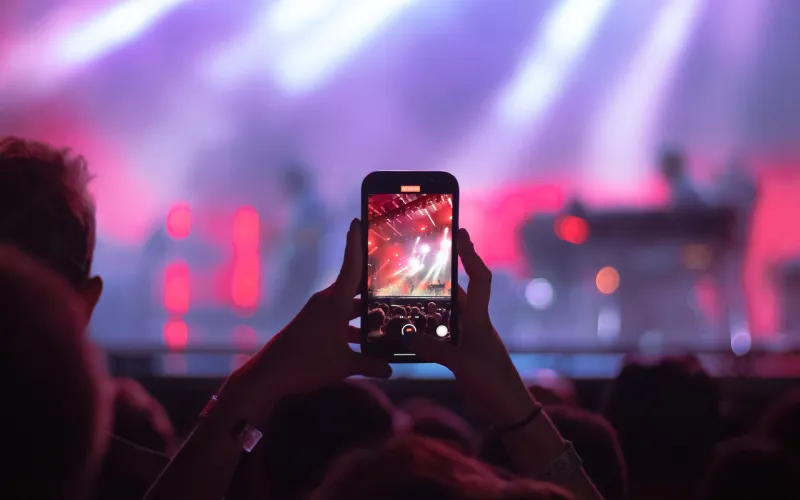
There's a moment that a lot of local artists know too well. The notification blows up, the video hits a million views, the DMs get flooded with fire emojis and "you're about to blow up" messages from strangers in time zones you've never thought about. It feels like the turning point. It feels like proof.
Then you try to book a show at a 300-cap room in your own city, and you sell 74 tickets.
This is the part nobody talks about on the highlight reel.
The Metric That Actually Matters Isn't the One Getting Celebrated
Ask any working local promoter what they look for when they're deciding whether to book an emerging artist, and almost none of them will lead with TikTok followers. That might sound counterintuitive in 2024, but the people actually putting money on the line have gotten burned enough times to know better.
"I had an artist come to me last spring with like 800,000 followers and a video sitting at 2.3 million views," says one independent promoter who books mid-size venues across the metro area. "Kid was genuinely talented. We put together a show, did the marketing, and moved maybe 110 tickets on a room that holds 400. It wasn't a disaster, but it wasn't what anyone expected either."
What promoters are actually watching is far more granular — email list size, geographic data on where followers are physically located, how many people showed up to the last show, and whether the artist has ever successfully mobilized their audience to do anything that requires leaving the house.
That last part turns out to be the hard one.
Passive Fans vs. People Who Actually Show Up
There's a category of fan that the music industry is only recently finding language for: the passive admirer. These are people who genuinely like your music, will stream it on repeat, will share the video, will comment something enthusiastic — and will absolutely not drive 25 minutes and pay a $20 cover on a Thursday night to see you perform it live.
TikTok, more than almost any other platform, is built to create passive fans at scale. The algorithm serves your content to people who have no prior relationship with you, no investment in your story, and no particular reason to follow through beyond the 47 seconds they spent watching your clip. That's not a knock on the platform — it's just the mechanics of how it works.
"Going viral on TikTok is more like getting your song placed in a TV commercial than it is like building a fanbase," explains one venue booking manager at a respected local spot. "People hear it, they feel something, they move on. The ones who actually become your people — the ones who show up — that's a totally different relationship that has to be built separately, usually over a longer period of time."
Artists who have figured this out tend to treat social media virality as a door-opener rather than a destination. The smart move, according to multiple people in the local scene, is to immediately convert that attention spike into something more durable: newsletter signups, direct follows, Discord communities, anything that creates a direct line that doesn't depend on an algorithm deciding to show your face again next week.
The Geography Problem Nobody Warned You About
Here's another wrinkle that catches artists off guard: viral audiences are almost never local audiences. A video that blows up is being watched in Atlanta, Phoenix, rural Ohio, and probably a few countries you weren't targeting. The person who comments "this is my new favorite song" is statistically more likely to be in a completely different metro area than they are to be in your city.
One artist who went through exactly this experience described checking her TikTok analytics after a video crossed a million plays and realizing that her top three audience cities were all places she'd never performed. Her home city, where she was trying to build a live following, barely cracked the top ten.
"It felt like being famous in a place I'd never been," she said. "Which is cool, I guess, but it doesn't help me fill the venue I'm trying to headline in two months."
This is why local promoters increasingly ask for geo-specific data before committing to a booking. Where are your Spotify listeners? Where are your Instagram followers concentrated? Can you pull up your TikTok analytics and show me what percentage of your audience is actually in this market? These are the questions that determine whether a show is going to work, and raw follower counts answer exactly none of them.
What Actually Builds a Local Draw
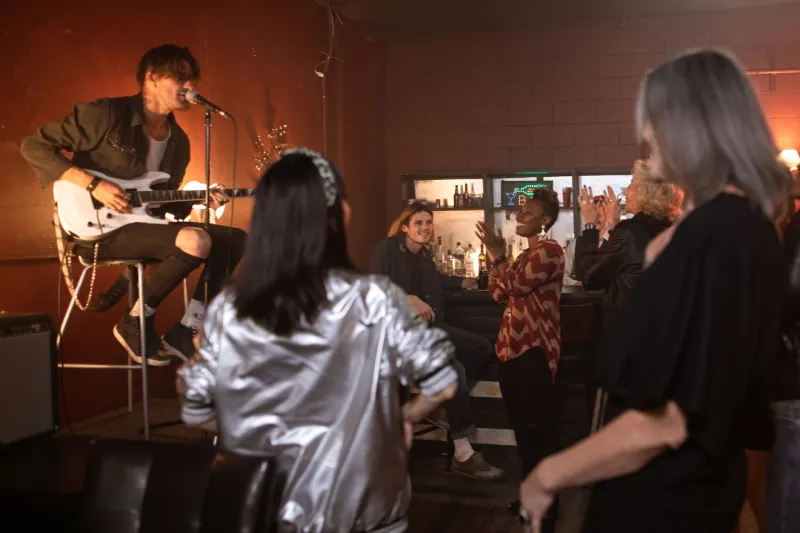
The artists who consistently sell out local rooms tend to share a few things in common that have very little to do with their social media presence. They show up — to other people's shows, to local events, to the open mics and listening sessions and industry nights that make up the connective tissue of a city's music community. They collaborate with other local acts whose audiences overlap but don't completely duplicate their own. They play smaller rooms consistently before they try to jump to bigger ones.
They also tend to have a direct relationship with their audience that doesn't run through a platform. Email lists get brought up constantly in conversations about what actually drives ticket sales. It sounds almost embarrassingly old-school, but the logic is airtight: an email list is yours. The algorithm can't decide tomorrow that it's not going to show your content anymore. The people on that list opted in specifically because they wanted to hear from you, which makes them dramatically more likely to act when you ask them to.
"I know artists with 50,000 followers who can't move 200 tickets," the same promoter said. "And I know artists with 8,000 followers and a tight email list who sell out every time. The list wins almost every time."
The Conversation the Industry Needs to Have Louder
None of this means viral moments are worthless — they're obviously not. A video that reaches millions of people is a genuine opportunity, and artists who know how to capitalize on that spike can absolutely convert it into something real. But the music industry, and especially the local scene ecosystem of promoters, venues, and managers, needs to stop treating follower counts as a proxy for actual demand.
Artists need to hear this early, before they've already planned a headlining show based on a number that doesn't mean what they think it means. And the platforms themselves have very little incentive to clarify the distinction between attention and loyalty — those are two very different products, and only one of them fills a room.
The city doesn't care how many people in Denver liked your video. It cares whether the people two neighborhoods over are willing to show up on a Friday night. That's still a question that takes time, consistency, and actual community-building to answer — and there's no algorithm shortcut that gets you there faster.