Sold to the Highest Bidder: The Iconic Venues Your City Lost to Luxury Developers
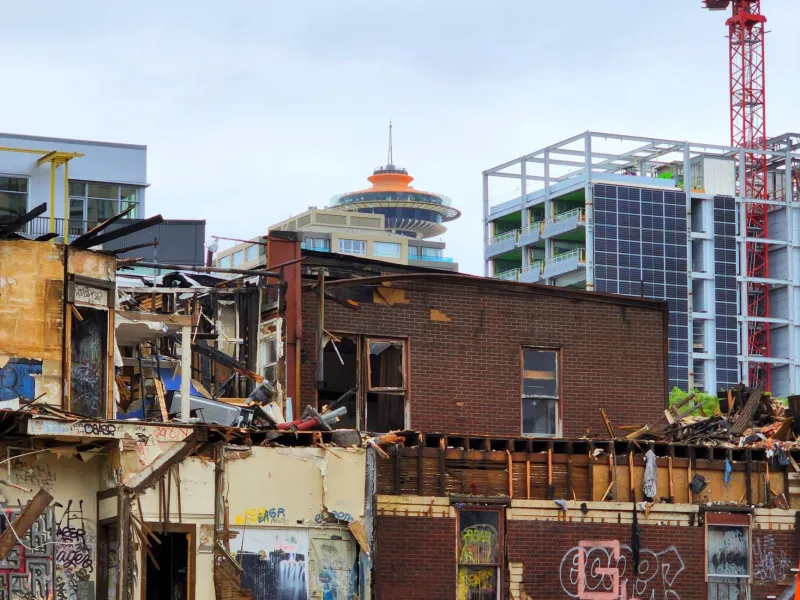
There's a particular kind of grief that hits you when you walk past a building you used to love and realize it's been turned into something unrecognizable. The marquee is gone. The loading dock is sealed up. Where the line used to snake around the block on a Friday night, there's now a doorman in a blazer and a keypad entry. Somebody's living in what used to be the green room.
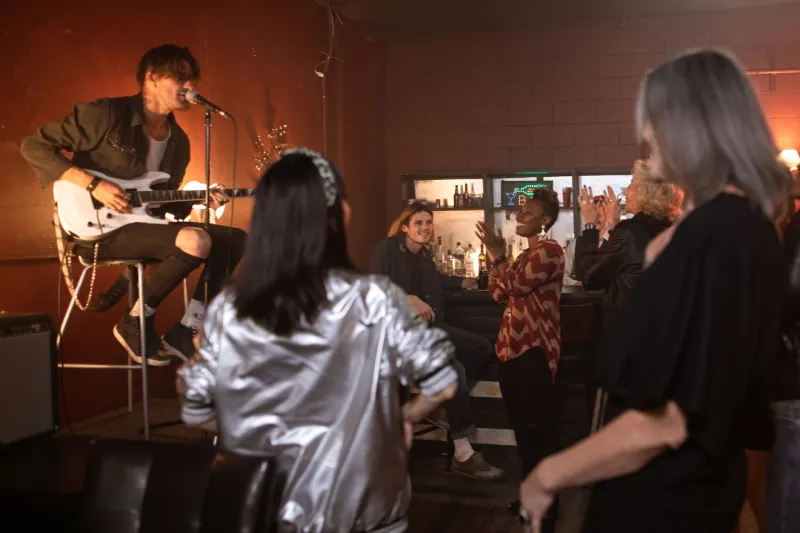
This isn't a new story, but it's an accelerating one. From Chicago's South Side to East Nashville to the Eastside of Los Angeles, the venues that built American music culture — the sticky-floored clubs, the converted warehouses, the old ballrooms with cracked plaster ceilings and perfect acoustics — are disappearing at a rate that should make every music fan in every city pay attention.
The Buildings That Made the Sound
Ask anyone who grew up going to shows in a major US city and they'll give you a list. Their list. The venues that felt like theirs. The 300-cap room where they saw their first real concert. The basement bar where they heard a local band for the first time and thought, this city has something. These aren't just buildings. They're reference points. They're how people orient themselves inside a cultural moment.
Longtime Chicago concertgoer and music historian Darnell Watkins puts it plainly: "When you lose a venue, you don't just lose a place to see shows. You lose the specific energy that only existed in that room. The way sound bounced off those walls. The crowd that particular club attracted. You can't replicate that in a new building, no matter how nice it is."
He's right. And the numbers back it up. According to data from the National Independent Venue Association, the US lost hundreds of independent music venues during the pandemic years, and a significant portion of those closures were made permanent not by financial failure alone, but by developers who saw an opportunity in the vacancy. A struggling venue in a gentrifying neighborhood is exactly the kind of distressed property that looks like a goldmine to the right buyer.
The Conversion Economy
Here's how it usually plays out. A venue that's been operating on thin margins for years — because that's just the economics of live music at the mid-size and small level — hits a rough patch. Maybe it's a bad run of bookings, a lease renegotiation that goes sideways, a noise complaint campaign from newer residents who moved in next door and suddenly object to the thing that was there before they arrived. The owner, exhausted and undercapitalized, makes the call. They sell.
What comes next depends on the city, the zoning laws, and frankly, how loud the community is willing to get. In some cases, the building gets landmarked and preserved — at least the shell of it. More often, it gets scraped entirely or renovated so aggressively that nothing of the original structure survives. Either way, the use changes. A music venue becomes luxury apartments. A jazz club becomes a co-working space. A ballroom that hosted everything from civil rights fundraisers to punk shows becomes a boutique hotel event space that rents for $5,000 a night.
Former venue owner Carla Reyes, who ran a beloved mid-size club in Los Angeles for over a decade before selling in 2021, describes the decision as one of the hardest of her life. "I held on as long as I could. But at a certain point, the offer on the table was more than I could make in ten years of shows. And I was tired. The system doesn't make it easy to keep these places alive." She pauses. "I still drive past it sometimes. I don't look."
What Gets Erased Along With the Building
The physical loss is obvious. What's harder to quantify is the cultural memory that goes with it. Venues aren't just spaces — they're archives. The walls of a long-running club hold decades of show posters, graffiti, setlists taped to the stage, the residue of thousands of nights that shaped how a city understood itself musically.
Community historian and archivist Marcus Webb has spent the last several years documenting venues in Detroit before they disappear. "Detroit's music history is world-famous, but the actual physical sites where that history happened? A lot of them are gone. And when you lose the building, you also lose the anchor point for the story. It becomes abstract. It becomes something you read about instead of something you can point to and say, right here. This is where it happened."
There's also a practical loss for working musicians. Every venue that closes is a room that no longer exists for an emerging artist to develop their craft, build an audience, and learn how to perform in front of real people. You can't stream your way into stage presence. You need the rooms. And when the rooms keep disappearing, the pipeline for developing local talent gets narrower and narrower.
The Fight to Hold On
Not every city is losing this battle quietly. In cities like New York, New Orleans, and Austin, advocacy organizations have pushed for what's sometimes called "Agent of Change" policies — legislation that puts the burden of noise mitigation on new residential developments built near existing venues, rather than on the venues themselves. It's a meaningful shift. Instead of the club getting shut down because a new condo tower moved in next door, the developer is required to soundproof their building before they break ground.
Other communities are taking a preservation angle. In Cleveland, local organizations have worked to get historic designations for venues tied to the city's rock and roll legacy. In Memphis, there are ongoing efforts to document and protect spaces connected to the city's blues and soul heritage. These aren't perfect solutions — a historic designation doesn't pay the light bill — but they create friction that slows the demolition machine down.
Smaller cities, interestingly, are sometimes doing this better than the major metros. Without the same development pressure, and with tighter-knit communities, places like Asheville, North Carolina, and Boise, Idaho have managed to maintain venue ecosystems that feel genuinely rooted in local culture. The scale works in their favor. When everyone knows everyone, it's harder for a developer to quietly acquire a beloved institution without the community noticing and mobilizing.
The Room You're Standing In Right Now
Here's the thing nobody wants to say out loud: the venue you love right now might be next. The club where you saw your favorite local band last weekend, the room that feels permanent and essential — it's probably running on a lease that's up for renewal in a few years, in a neighborhood that's changing, in a city where the economics of live music are always precarious.
That doesn't mean you should panic. It means you should show up. Buy the ticket. Buy the drink. Tell people about the show. The venues that survive are the ones with communities that treat them like the irreplaceable cultural institutions they actually are — not just when they're under threat, but every single weekend.
Because once the building is gone, you can tell the story all you want. You can post the old photos and share the memories and mourn what was lost. But you can't go back. The room is gone. And someone's living in it now.