You Can't Record What You Can't Afford: The Studio Access Problem Killing Local Talent

Photo by Photo by Tim Toomey on Unsplash on Unsplash
There's a rapper on the south side of your city with a notebook full of verses that would make your jaw drop. There's a singer-songwriter in a cramped east side apartment whose demo — recorded on a laptop mic — has been passed around local music circles for two years. People know their names. People show up to their open mic sets. And yet, neither of them has ever stepped inside a professional recording studio.
This isn't a talent problem. It's an access problem. And it's one of the least-talked-about reasons why so many of your city's most promising unsigned artists never make the jump from local buzz to something bigger.
The Math Doesn't Work for Most People
Let's talk numbers for a second. A mid-tier professional recording studio in most major US cities runs anywhere from $75 to $200 an hour. A basic single — tracked, mixed, and mastered properly — can easily eat up 10 to 15 hours of studio time. You do the math. That's potentially $2,000 or more just to get one song done the right way, before you've spent a dollar on distribution, promotion, or video production.
For artists working service industry jobs, gig economy shifts, or juggling two part-time gigs just to keep the lights on, that number isn't a stretch goal. It's a wall. And on the other side of that wall is where music careers actually get built.
The frustrating part? The talent gap between an artist who can afford consistent studio time and one who can't is often nonexistent. What separates them is economic, not artistic.
The Studios That Pick Sides Without Saying So
Here's something most people outside the industry don't realize: not every recording studio is interested in developing artists. Plenty of them — especially the nicer, better-equipped ones — run almost entirely on bookings from labels, established acts, and corporate clients. Jingle work. Podcast production. Voice-over sessions. That's where the reliable money is, and nobody can blame a business for chasing it.
But the side effect is that these studios become functionally inaccessible to unsigned local artists, even when their rates are technically public. When your calendar is packed with paying clients who book in blocks of days rather than hours, there's no incentive to carve out time for an emerging artist who needs a payment plan and a little extra patience.
Some studios are more explicit about it. Artists in cities across the country have shared stories about calling studios, getting quoted a rate, and then — once it becomes clear they're unsigned and unaffiliated — suddenly finding that the availability has dried up. It's rarely said out loud. It doesn't have to be.
The Engineers Who Are Actually Doing the Work
Not everyone is playing that game, though. In neighborhoods that the glossy studios tend to overlook, a different kind of infrastructure has been quietly building itself.
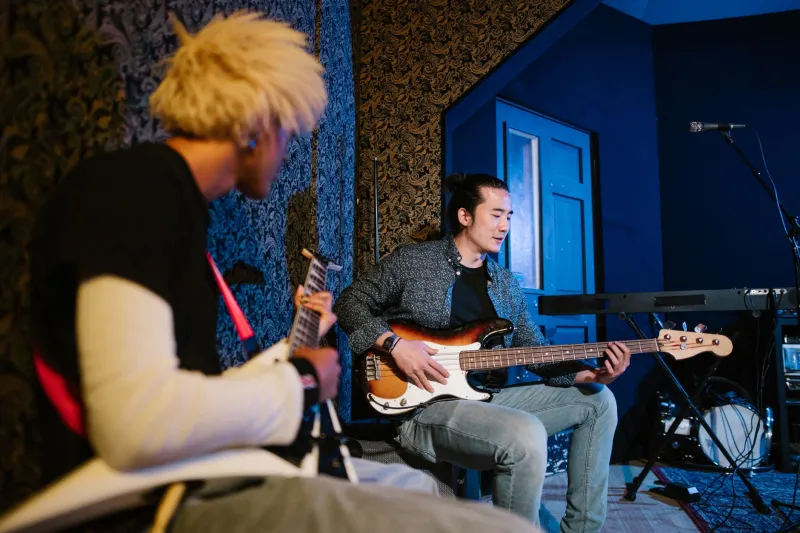
Think about the bedroom producer who converted a spare room into a legitimate tracking space and now charges $30 an hour to work with artists from the neighborhood — not because they don't know their worth, but because they remember what it felt like to not be able to afford a session. Or the sound engineer who spent a decade working at a major studio, learned everything there was to learn, and then deliberately set up shop in an underserved part of the city specifically to work with unsigned talent.
These are the people doing the real democratization work. They're not waiting for a grant or a nonprofit initiative. They're just building something that makes sense for the community they're part of. And in a lot of cases, the records coming out of these smaller, scrappier setups are genuinely competitive — sometimes indistinguishable from what's coming out of the expensive rooms downtown.
Producers like this tend to operate on reputation and relationships. You find out about them through word of mouth, through a friend of a friend, through someone sliding a number in your DMs after a show. That's partly beautiful and partly a problem, because if you're not already plugged into the right circles, you might not even know these resources exist.
What "Democratizing" Actually Looks Like
A few programs around the country have started to chip away at this more systematically. Some cities have launched subsidized studio access programs through arts councils or community development organizations, offering vouchers or deeply discounted sessions for artists who meet certain income thresholds. A handful of universities with music production programs have opened their facilities to local artists during off-hours. Some independent labels have started building recording time into their artist development agreements, specifically to remove the financial burden from the equation.
But these programs are patchy. They're underfunded, often competitive to get into, and sometimes so buried in application requirements that artists who most need them can't navigate the process. The gap between what exists and what's needed remains enormous.
What actually moves the needle, consistently, is individual investment. A producer who mentors. An engineer who gives someone their first real session on a handshake. A studio owner who holds a slot every week specifically for unsigned local artists and charges whatever they can afford. It's not scalable in the way a policy solution would be, but it's real, and it's happening in your city right now — if you know where to look.
The Bigger Picture
Studio access isn't just about making records. It's about what happens after the record gets made. A professionally recorded track opens doors that a demo doesn't. It gets playlisted. It gets pitched to blogs and tastemakers. It gets taken seriously by bookers and labels. The quality of your recording is, unfairly but genuinely, part of how the industry evaluates your legitimacy as an artist.
When the barrier to that quality is purely financial, the city's music scene ends up being a lot smaller than it should be. The voices that make it through are the ones with resources, connections, or luck — not necessarily the ones with the most to say.
Your city has artists who deserve better than a laptop mic and a prayer. Some of them are out there right now, figuring out how to make something out of nothing. The least the local music community can do is make sure they know about every door that's actually open to them — and push harder to open more of them.