When the East Side Meets the West Side: The Cross-Neighborhood Collabs Redefining Your City's Sound
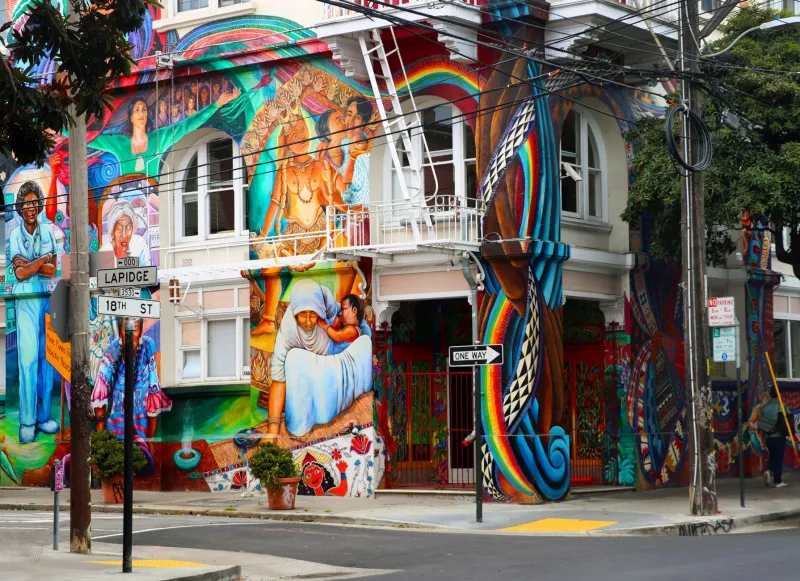
There's a version of your city that exists only on a map — divided by highways, zip codes, and the invisible lines that tell people where they're "supposed" to be from. Then there's the version that exists in the music. And lately, those two versions have been in serious conflict with each other.
Across neighborhoods that don't always talk to each other, something is quietly happening in studios, basement sessions, and late-night voice memo exchanges. Artists are crossing those invisible lines, and the sounds they're bringing back are unlike anything either side of town was making on its own.
This is the remix effect — not the kind where someone slaps a new beat on an old track, but the kind where geography itself becomes an instrument.
The Sound of a City Is Never Just One Thing
Every major city has its sonic mythology. You've got the neighborhoods that "own" certain sounds — the block that raised the trap producers, the district where the jazz cats still hold court, the corner of town where bedroom pop kids are uploading lo-fi sets to SoundCloud at 2 a.m. These micro-scenes develop their own rules, their own aesthetics, their own unspoken codes.
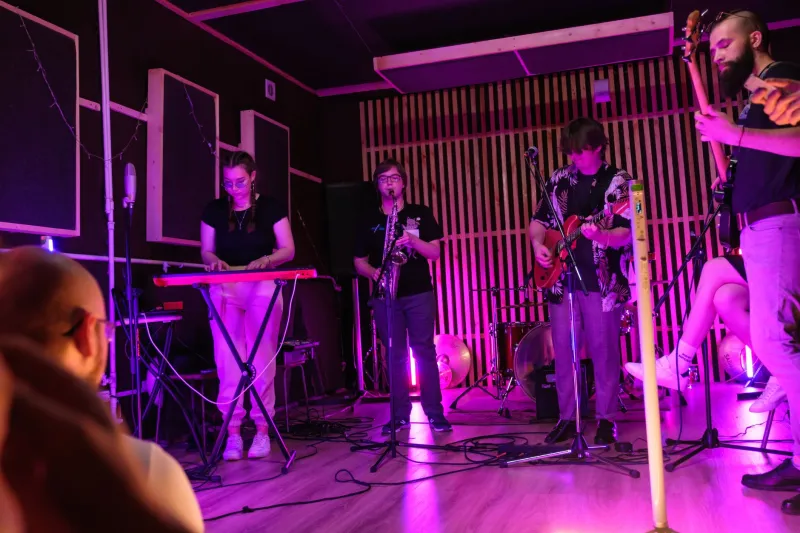
But here's the thing nobody talks about enough: those scenes were never as sealed off as the mythology suggests. The real magic has always happened at the edges — where one neighborhood's sound bleeds into another's, where a producer who grew up on gospel starts working with a rapper who came up on cumbia, where a jazz-trained keyboardist finds herself in the studio with an electronic producer from across town who's never read a piece of sheet music in his life.
Those collisions? That's where your city's actual sound lives.
Breaking the Silo, One Session at a Time
Talk to any artist who's crossed neighborhood lines to collaborate, and you'll hear the same thing: it started with a mutual friend, a shared show, or a random DM. The infrastructure for these connections is almost never formal. There's no city-funded initiative bringing the jazz district together with the hip-hop corridor. It happens organically, messily, and usually over a shared meal or a late-night studio session that was supposed to last two hours and ran until sunrise.
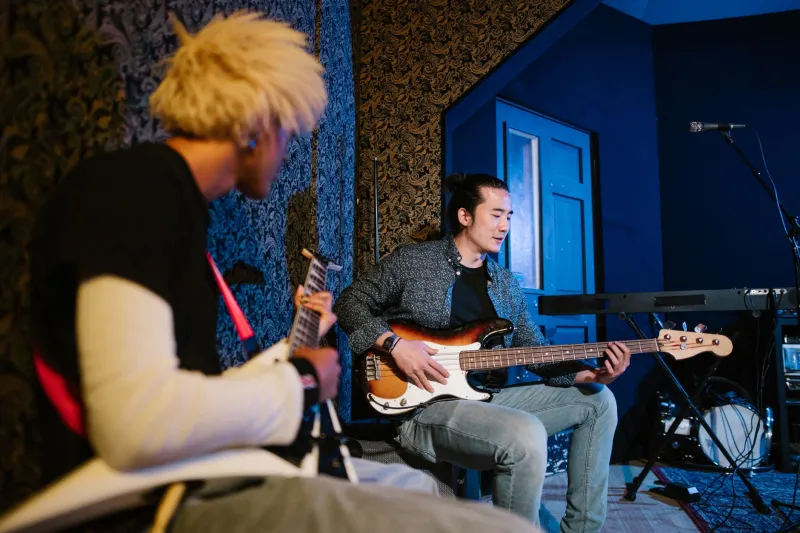
What comes out of those sessions is often unpredictable in the best way. A producer known for hard-hitting 808s finds himself adding live trumpet to a track because the musician he's working with just happened to bring her horn. A singer-songwriter from the folk-heavy arts district ends up lending her voice to a drill beat because a mutual friend made an introduction at a local show. Neither of them would have made that music alone. Neither of them could have.
The geography matters because it shapes what each artist brings to the table. The sonic references, the cultural touchstones, the way a melody moves — all of it is informed by where you grew up, where you rehearsed, where you performed your first shows. When those references collide, the result is something that couldn't have been manufactured by an algorithm or engineered in a major label boardroom. It's specific to your city in a way that's almost impossible to replicate anywhere else.
The Neighborhoods Aren't Just Backdrops — They're Collaborators
It sounds abstract, but spend enough time listening to music made across neighborhood lines and you start to hear the places themselves in the tracks. The urgency of a gentrifying neighborhood. The warmth of a community that's been rooted in the same blocks for generations. The restlessness of an up-and-coming district still figuring out its identity.
Artists don't just bring their skills to a collaboration — they bring their environment. The sounds they grew up with, the venues they cut their teeth in, the local DJs who shaped their taste. When two artists from different parts of the city sit down to make something together, they're not just combining their individual talents. They're combining entire worlds.
That's why the best cross-neighborhood collabs feel like more than just good music. They feel like documents. Like proof that your city contains multitudes that most people never get to hear in the same sentence.
What Gets Lost When Artists Stay in Their Lanes
Here's the flip side, and it's worth sitting with: when artists don't cross those lines, something gets lost. Scenes calcify. Sounds get predictable. The same producers work with the same artists, the same venues book the same bills, and what was once vital starts to feel like a tribute to itself.
It's not anyone's fault, exactly. Building a local scene takes real work, and there's a natural tendency to stick with what you know — the people who get your references, who show up to your shows, who move in the same circles. But that comfort has a cost. Over time, a scene that doesn't let new influences in stops evolving. It stops surprising people. And eventually, it stops mattering.
The artists who are doing the most interesting work right now are the ones who are willing to be uncomfortable — to walk into a session where they're not the expert, to make something that doesn't fit neatly into any of the boxes their home neighborhood built for them.
How to Find the Collabs Before They Blow Up
If you want to hear the next evolution of your city's sound before it becomes the sound, you have to go looking for it in the right places. Not the big festival lineups or the headlining club nights — those are where the established scenes showcase what they've already figured out. The real action is at the smaller shows, the mixed-bill nights, the open mics where a jazz musician and a rapper share a stage because the booker had two slots left and took a chance.
Follow the local promoters who are known for booking across genres. Keep tabs on the producers who show up in the credits across multiple scenes. Pay attention to the venues that don't have a single sound — the ones that'll do a soul night on Friday and a hardcore show on Saturday and a hip-hop showcase on Sunday. Those are the spaces where cross-pollination happens, where the remix effect takes root.
Your city's sound isn't one thing. It never was. It's the sum of every neighborhood, every influence, every late-night session where two artists from different parts of town decided to stop making music for their own corner and start making music for the whole city.
That's the remix worth paying attention to.