Staying Local on Purpose: The Artists Who Said No to Going Viral
There's a version of success the music industry has been selling for the better part of a decade now — the kind that arrives in the form of a playlist add, a trending TikTok sound, or a follower spike that makes your manager's phone blow up at 2 a.m. It looks great on a dashboard. It photographs well for a press release. And for a lot of artists, it evaporates just as fast as it showed up.
But something quieter is happening in cities across the country, and it doesn't have a trending hashtag. A growing wave of artists — producers, MCs, singer-songwriters, club-circuit veterans — are making a very deliberate choice to stay small in reach and deep in roots. They're building careers the old-fashioned way: one handshake, one hometown show, one loyal fan at a time. And some of them are doing better financially than artists with ten times the stream count.
The Metrics That Actually Pay Rent
Ask any independent artist what their Spotify monthly listener count translates to in real dollars, and you'll get a laugh — or a grimace. The math has never been kind. At fractions of a cent per stream, you'd need millions of plays just to cover a month's studio time, let alone touring costs, gear, or, you know, food.
Ticket sales, though? That's a different conversation entirely.
When an artist can reliably sell 300 tickets at $20 a pop in their home city — not once, but four or five times a year — that's a real income floor. Add in merch, local brand partnerships, and the occasional private event booking, and suddenly the math starts making sense in a way that streaming never quite did.
"I stopped caring about monthly listeners two years ago," says one independent R&B artist who regularly packs mid-size venues in her metro area but has deliberately avoided pitching to major playlist curators. "My fans here know every word. They bring their friends. They buy the hoodie. That relationship is worth more to me than a number on a screen that some algorithm can reset overnight."
Her manager echoes the sentiment. "We started thinking about her career like a small business with a loyal customer base, not like a product trying to go mass market. That shift changed everything about how we make decisions."
What Local Actually Means in 2025
It's worth unpacking what "staying local" looks like in practice, because it's not the same as playing the same bar every Friday night and calling it a strategy. The artists doing this intentionally are building ecosystems.
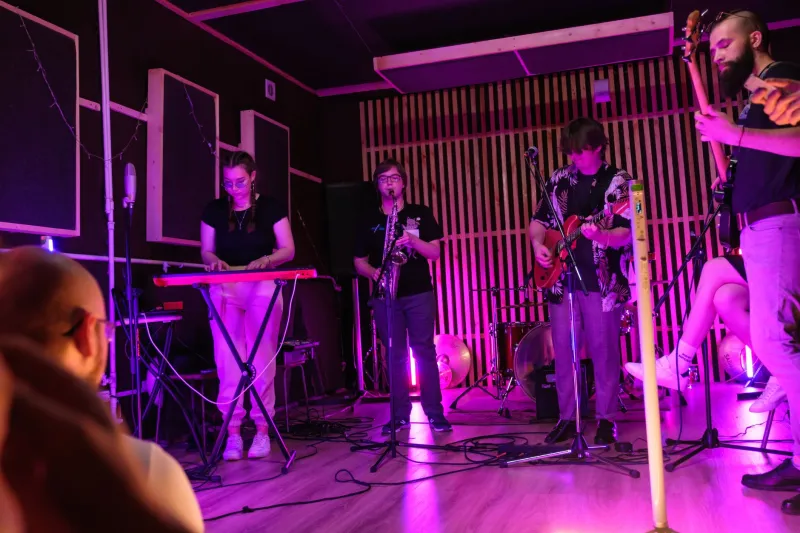
They're collaborating with other regional acts to cross-pollinate fan bases within the city. They're showing up to community events, block parties, and cultural festivals — not just as performers, but as participants. They're booking residencies at venues where they can grow a relationship with the room over months, not just one-off shows. They're working with local photographers, videographers, and graphic designers, keeping creative dollars circulating inside their own community.
Venue owners notice the difference immediately. "There's a certain kind of artist who treats a show like a transaction — come in, perform, collect, leave," says one club booker who's been running rooms in his city for over a decade. "Then there's the ones who are actually part of the fabric of this place. Those are the ones I call first when I've got a Saturday open. Those are the ones that fill the room."
The trust built through that kind of presence is nearly impossible to replicate with a press campaign. And it's the kind of trust that turns a one-time ticket buyer into someone who shows up every single time, brings two friends, and defends your name in comment sections unprompted.
The Algorithm Can't Feel the Room
Here's the thing about national trending moments: they're largely indiscriminate. A song can blow up because of a meme, a TV sync, or a 15-second clip that resonates with people who will never buy a ticket, never stream another song, and never think about that artist again after the trend cycle moves on. Virality and fandom are not the same thing, and conflating them has burned a lot of artists who mistook a spike for a foundation.
Algorithms are also, by design, generalist. They optimize for broad appeal, which means they tend to flatten regional identity. An artist with a sound that's deeply rooted in the sonic culture of their specific city — the cadence of the local rap scene, the particular flavor of the regional club circuit, the references that only land if you grew up in that ZIP code — often doesn't survive the translation to a national audience without losing what made them compelling in the first place.
"My music sounds like this city," says one producer who's built a reputation as a go-to collaborator for local artists across multiple genres. "If I sand down all the edges to make it palatable everywhere, it doesn't sound like anywhere. What's the point?"
That rootedness, counterintuitively, can be an enormous competitive advantage. In a streaming landscape saturated with music that could have been made anywhere by anyone, something with a genuine sense of place stands out — at least to the people who share that place.
The Long Game Is Local
None of this is to say that national recognition is inherently bad, or that artists who want to grow beyond their city limits are somehow selling out. Ambition looks different for everybody, and there's no single right answer here.
But the artists, managers, and venue operators who are rethinking the conventional wisdom are raising a legitimate question: what does a sustainable music career actually look like, and is chasing algorithmic validation the most reliable path to one?
For a lot of them, the answer increasingly points back home. Back to the room where people know your name before you take the stage. Back to the city that shaped your sound and keeps showing up for it. Back to the handshake over the streaming metric, the real conversation over the follower count, the sold-out hometown show over the playlist placement that comes and goes before the month is out.
The algorithm doesn't know your city exists. But your city does. And if you're doing it right, that might be enough — and then some.