The Person Behind the Person: How Sound Engineers Are Really Making or Breaking Local Artists
You know the artist. You know the producer, maybe. You've probably even seen the manager lurking backstage. But there's another set of hands on your city's music that almost never gets credited, talked about, or celebrated — and those hands might be doing more heavy lifting than anyone else in the room.
Sound engineers. Mix engineers. Live audio techs. Call them what you want, but these are the craftspeople who stand between a raw performance and something that actually moves people. And in cities where local music scenes are fighting for oxygen, their influence runs deeper than most fans ever realize.
The Mix Is the Message
Here's something most casual music listeners don't think about: a great song can sound terrible, and a decent song can sound incredible. The difference is almost always in the mix.
When a local artist walks out of a recording session with rough tracks, those files don't magically transform into a polished single. A mix engineer sits down — sometimes for hours, sometimes for days — and makes hundreds of micro-decisions about levels, EQ, compression, reverb, stereo width, and vocal presence. Each choice shapes how the listener emotionally receives the music. Is the bass warm or punchy? Does the vocal sit in front of the track or float behind it? Does the whole thing feel intimate or stadium-sized?
"People hear the artist, but they're really hearing my interpretation of the artist," says one mix engineer who's worked with dozens of local acts across hip-hop, R&B, and indie rock. "I'm not trying to take over. But I am making choices that affect whether someone feels something or doesn't."
That's a lot of power for someone who rarely gets a shoutout.
Live Sound Is Its Own Language
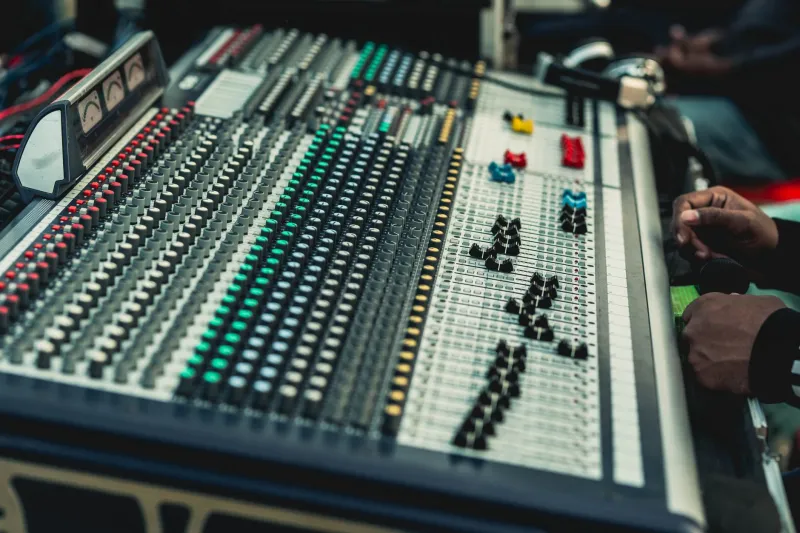
The conversation doesn't stop in the studio. Every time a local artist hits a stage, there's a live sound engineer running the board — and that person is essentially performing alongside the act in real time.
A bad live mix can tank a show that should've been career-defining. Vocals buried under guitar. Bass so loud it muddies every other frequency. Monitors so off that the artist can't hear themselves and starts to drift pitchy. Audiences feel it even when they can't name it. They just know something felt off, and they walk away less convinced.
Conversely, a great front-of-house engineer can make a four-piece playing a 200-capacity room sound like they belong in an arena. They're reading the room — literally accounting for how sound bounces off walls, how a packed crowd absorbs frequencies differently than an empty space, how the vibe shifts between soundcheck and showtime.
"Every room is a puzzle," says a live audio engineer who's worked the boards at some of the city's most respected mid-size venues. "You figure out what the room wants to fight you on, and then you work with it. The artist doesn't have time to think about all that. That's my job."
The Access Problem Nobody's Talking About
Here's where it gets thorny. Not every local artist has equal access to skilled engineers — and that gap plays a quiet but significant role in who gets taken seriously.
Artists with bigger budgets can afford experienced mix engineers with industry-level ears and gear. They can hire live audio pros who've toured nationally and know how to make any room work. The result is a sound that signals professionalism before a single note of the song is even processed.
Artists coming up without those resources? They're often working with whoever's available, affordable, or willing to trade time for exposure. Sometimes that works out — hungry young engineers can be incredibly talented. But the inconsistency is real, and it shows up in the final product.
"I've heard demos from artists who are genuinely gifted, and they sound like they recorded in a parking garage," says one indie label A&R scout who asked to remain anonymous. "And I've heard mediocre artists who sound polished because someone with real skills worked on their stuff. It changes how you perceive them entirely."
It's not a fair system. But it's the one that exists.
The Engineers Who Shaped a Sound
In every major city, there are a handful of engineers whose fingerprints are all over the local music that people love — even if those people couldn't tell you the engineer's name.
Think about the sonic signature of your city's rap scene, or the particular warmth in the indie folk records that get written up in local press. Somewhere in that sound is a person who made specific technical choices that became part of the aesthetic. They brought in a certain reverb on the snare. They rode the low end in a way that became a signature. They mixed vocals dry when everyone else was drowning them in effects.
Over time, those choices accumulate into something that sounds like a scene. A sound. A city.
"I never thought of it as building a legacy," admits one veteran engineer who's been working local sessions for over fifteen years. "I just kept doing the work. But yeah, when I hear certain records come out now and they've got that thing — that texture — I recognize it. I was part of figuring out what that should sound like."
Giving Credit Where It's Due
The culture around crediting engineers is slowly shifting, particularly in hip-hop and electronic music where production credits have always carried more weight. But in plenty of genres and local scenes, the engineer is still an afterthought — a name buried in the liner notes that nobody reads.
Some artists are pushing back on that. More and more, you'll see local acts shouting out their engineers in social posts, bringing them onstage, including them in press photos. It's a small gesture, but it matters. It signals that the music isn't just the artist's alone — it's a collaborative product, and the people who shaped it deserve recognition.
For the engineers themselves, most aren't in it for the fame. They're in it because they love the craft, because they hear something in a rough session that they want to help bring to life. But acknowledgment has real-world value too. It builds reputations. It leads to more work. It helps them sustain a career doing something that directly feeds your city's culture.
Hear It Differently
Next time you're at a local show and the sound is just right — when the kick drum hits your chest and the vocals are crystal clear and the whole room feels locked in — take a second to look toward the back of the venue. There's probably someone at a mixing board, headphones around their neck, making constant small adjustments, completely invisible to everyone around them.
That person helped make what you're feeling possible.
And the next time a local artist drops something that sounds undeniable — something that makes you think they're about to blow up — know that somewhere in that record, an engineer made choices that pushed it from good to great.
Your city's sound doesn't come from nowhere. It comes from people. More of them than you think.