Right Next Door and Totally Strangers: How the Internet Pulled Local Artists Away From the Collaborations Already Living in Their ZIP Code
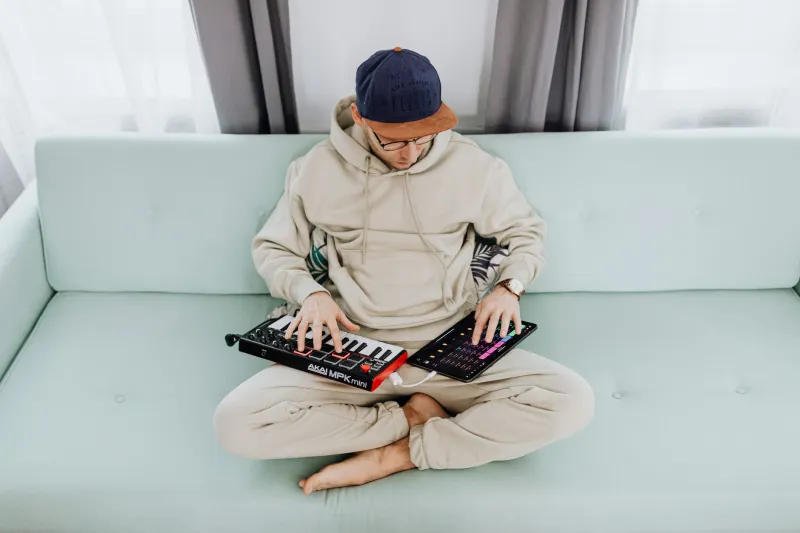
There's a producer in your city right now — probably within a mile of where you're reading this — who's been sending beats to an artist in Atlanta for the past six months. They've never met in person. They probably never will. Meanwhile, the rapper two apartment buildings over has been looping a YouTube tutorial beat for her last three singles because she doesn't know where to find someone local to work with.
This isn't a rare situation. It's the new normal. And it's slowly hollowing out the kind of neighborhood-level sonic identity that once made cities sound like themselves.
The Convenience Trap
Beat marketplaces like BeatStars, Airbit, and Traktrain made it stupid easy to license a professional-quality instrumental without ever leaving your bedroom. Splice gave producers a library of samples so massive that you'd never have to dig through someone else's record crates. And platforms like Soundtrap and Bandlab let artists record remotely with collaborators they found on Instagram or Reddit.
On paper, all of that sounds like democratization. In practice, it created a weird kind of creative isolation dressed up as connectivity.
"I've got collabs with people in Houston, in Philly, in LA," says Marcus, a rapper who's been grinding in his city's underground scene for the better part of four years. "But honestly? I couldn't tell you the name of a single producer who lives in my neighborhood. I just never thought to look."
That's the trap. Not laziness. Not lack of ambition. Just the quiet gravitational pull of whatever the algorithm surfaces next.
What the Algorithm Can't Replicate
Here's the thing about serendipity: it doesn't have a monthly subscription fee.
The collaborations that shaped the sounds of specific cities — the crunk out of Atlanta, the chopped-and-screwed culture in Houston, the gritty boom-bap that defined New York's early '90s underground — didn't happen because someone ran a search query. They happened because people were in the same rooms, hearing the same streets, eating at the same spots after late-night sessions.
Denise, a producer who's been building her catalog for almost five years, puts it bluntly: "When you're in the same city as someone, you're influenced by the same things. The same traffic sounds, the same local slang, the same energy. That shows up in the music whether you're trying to put it there or not. You can't get that through a file transfer."
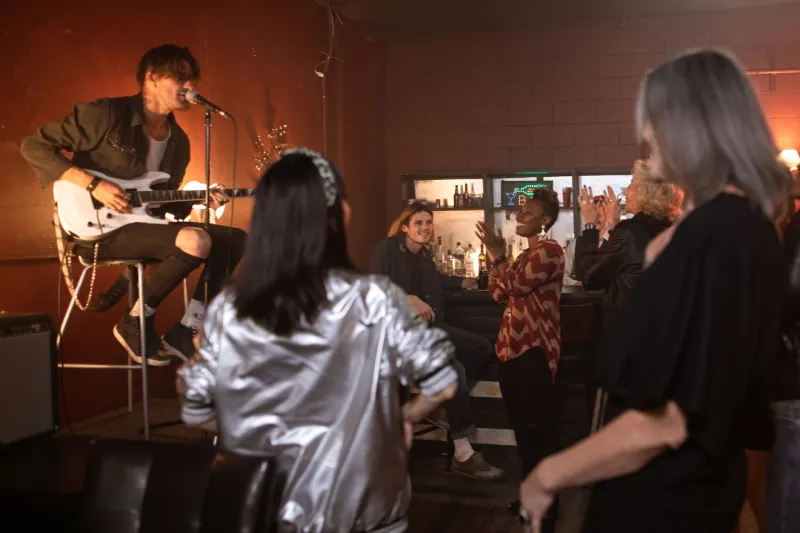
She's been trying to bridge that gap intentionally, hosting what she calls "beat sessions" out of a rented rehearsal space on the east side of her city — monthly meetups where local producers play unfinished work and rappers freestyle over it. No contracts, no money changing hands, just people in a room making noise together.
The results have surprised even her. "Two people who met at my last session just dropped a single together. They lived literally four blocks apart for two years and had no idea the other one existed."
The Algorithmic Bubble Problem
Part of what's driving this disconnect is the way discovery platforms work. When an artist searches for beats, the algorithm serves up what's trending — which usually means whatever sounds are already saturating streaming playlists nationally. That creates a feedback loop where local producers trying to sell beats end up chasing the same sonic templates as producers in every other city, because that's what moves units on the marketplace.
The result? A flattening. A smoothing-out of the rough, specific edges that make a city's music sound like it came from somewhere.
"I used to be able to hear a track and know it was from here," says DJ Kelon, who's been spinning at local venues for over a decade and has watched the scene evolve up close. "There was something in the drum patterns, something in the samples people were choosing. Now everything sounds like it could've come from anywhere. And I think part of that is because artists aren't building with each other locally anymore. They're building with the internet."
Kelon isn't anti-technology — he's quick to clarify that. "I'm not saying go back to passing around mixtape CDs. I'm saying the internet should be a supplement, not a replacement. Your city has flavor. Why would you outsource that?"
The Missed Chemistry
There's also something that gets lost in remote collaboration that's harder to quantify: the unplanned moment. The producer who throws on a different sample because the artist walking through the door that day had a different energy than expected. The rapper who rewrites a hook because the beat hit different on a real speaker in a real room versus headphones on a laptop.
Jamila, a singer-songwriter who recently made the deliberate choice to only work with producers in her city for her next project, describes it as rediscovering a language she didn't know she'd stopped speaking.
"When I'm in the studio with someone local, we reference the same things. We'll be like, 'make it feel like the south side on a Friday night' and they know what that means. I don't have to explain it. That context just lives in the music."
Her current project is the most creatively satisfying thing she's made, she says — and it came directly from forcing herself off the beat marketplace and into actual conversations with people in her own scene.
How to Break the Pattern
So what does it look like to actually reconnect with the local ecosystem? A few artists and producers offered practical suggestions that don't require abandoning digital tools entirely.
Show up physically. Open mics, beat battles, local showcases — these aren't just performance opportunities. They're scouting sessions. The person you need to work with is probably already in those rooms.
Use social media to find local, not global. Search your city's name alongside music-related hashtags. Follow local venues and labels. The algorithm isn't going to surface your neighbor organically, so you have to do it manually.
Be direct. If you hear something local that moves you, reach out. Artists are often more accessible at the local level than people assume. A DM that says "I'm from here too and I love what you're doing" hits different than one lost in a pile of industry-speak.
Host something. Denise's beat sessions model works because someone made the first move. It doesn't have to be elaborate. A group chat, a monthly hangout, a shared rehearsal space — proximity is the whole point.
Your City Is the Collab You're Not Taking
The internet isn't going anywhere, and neither are the platforms that make remote production feel effortless. But the artists who are going to build something genuinely lasting — something that sounds like it came from here — are going to be the ones who treat their city as a creative resource, not just a location tag on their Instagram bio.
The chemistry you're looking for might not be on BeatStars. It might be in the apartment complex parking lot two streets over, headphones around someone's neck, waiting for someone to just say something.