Behind Every Sold-Out Show Is Someone You've Never Heard Of
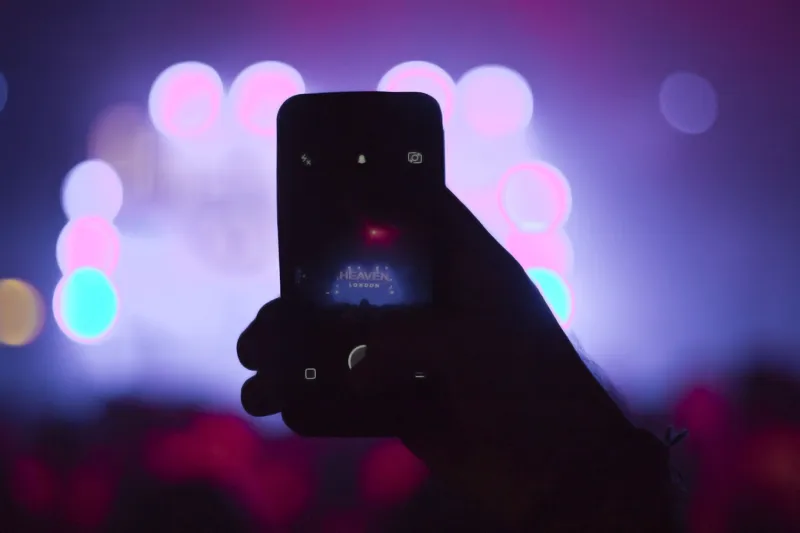
You found out about that warehouse party through Instagram. You heard about the new rooftop bar opening because it popped up on your For You page three times in one week. You bought a ticket to that mid-week showcase because the flyer hit different and the caption actually made you feel like you'd regret skipping it. None of that happened by accident.
There's a whole layer of the city's entertainment ecosystem that almost never gets a byline, a shoutout from the stage, or a mention in the press release. Social media managers and digital curators — the people running the accounts for venues, collectives, promoters, and artists — have quietly become some of the most powerful taste-makers in any urban scene. And most people couldn't pick them out of a lineup.
The Algorithm Is the New Door Policy
Ask anyone in nightlife or local music what changed most in the last five years, and you'll hear variations of the same answer: the feed replaced the flyer. Word of mouth still matters, but it travels through DMs now. A well-timed Instagram Reel can do what six weeks of wheat-pasting posters never could.
That shift handed enormous influence to whoever controls the posting schedule. "People think the promoter decides who gets buzz," says one social media manager who handles accounts for three mid-size venues in a major metro. She asked to stay anonymous because, in her words, "the second people know who I am, the dynamic changes." "But honestly? If I don't post it right, if the caption's flat, if the graphic doesn't stop the scroll — it doesn't matter who's performing. The room will be half empty."
She's not overstating it. Venue capacity and artist reputation still matter, obviously. But in a city where there are forty things happening on a Friday night, visibility is the first battle. Winning that battle increasingly means understanding how platforms reward certain content — and knowing how to game it without making the content feel gamed.
What "Getting It Right" Actually Looks Like
Posting a flyer at 11 PM on a Tuesday isn't a strategy. Neither is reposting the artist's own promotional content and calling it a campaign. The social media managers who are actually moving the needle talk about their work the way media buyers talk about ad placements — with obsessive attention to timing, format, and audience behavior.
"I track when our followers are online down to the hour," says the digital director for a collective that runs events across multiple cities. "I know that our crowd engages hardest on Thursday evenings and Sunday afternoons. So if I've got something dropping on a Saturday, I'm not waiting until Friday to post. I'm building toward it all week, and I'm hitting that Thursday window hard."
Beyond timing, there's the question of format. Static flyers still get posted, but they're rarely the engine anymore. Short video clips — a snippet of a sound check, a ten-second walk-through of a venue transformation, a quick talking-head from the headliner — consistently outperform static graphics on nearly every platform. "People want to feel like they're already there before they decide to show up," he says. "My job is to manufacture that feeling."
Stories, countdowns, location tags, hashtag ecosystems — every piece of it is deliberate. And behind all of it is a person making judgment calls about which artists get the premium content treatment and which ones get a single post and a prayer.
The Quiet Power of Curation
Here's where it gets complicated. When a venue's social media manager decides to build a full content rollout around one artist and give another a perfunctory mention, that's not just a marketing decision. It's a career decision — for the artist. It shapes who gets perceived as worth showing up for and who gets lost in the noise.
"I've seen artists go from playing to thirty people to selling out a three-hundred-cap room in two months because we went all-in on their content," says a freelance digital strategist who works with both venues and independent promoters. "And I've seen the opposite — someone with genuine talent who just never got the push, and their numbers reflect that. It's hard to watch."
She's careful to note that the decisions aren't arbitrary. Engagement rates, audience demographics, cross-promotional potential — there's a logic to who gets elevated. But she admits the logic isn't always fair. "If an artist already has a following, it's easier to justify the investment. So the people who need the platform the most are sometimes the ones least likely to get it."
That feedback loop — where existing visibility drives more investment in visibility — is one of the more uncomfortable realities of how urban scenes actually function in the social media era. The underground stays underground partly because no one with a big account decides it's worth their metrics to shine a light on it.
When the Account IS the Brand
Some of the most influential accounts in any city's scene don't belong to a venue or a promoter at all. They belong to individual curators who built followings by being reliably plugged in — people who know about the pop-up before the pop-up gets announced, who share the flyer the same hour it drops, who have the access and the taste to be genuinely useful to their followers.
These independent curators operate in an interesting gray zone. They're not officially on anyone's payroll, but venues and promoters court them the same way publicists court journalists. A feature on the right account can move tickets. A post from a trusted local curator carries credibility that a venue's own account sometimes can't manufacture.
"I don't take money for posts," says one such curator, who runs a nightlife-focused account with over forty thousand local followers. "The second I do that, I lose the thing that makes people trust me. But I'm not going to pretend there aren't perks — guest list, early access, relationships that open doors."
The line between independent tastemaker and unpaid marketing arm gets blurry fast. But the influence is real either way.
So Who's Actually in Charge?
The honest answer is that it's distributed in ways that would have seemed strange even a decade ago. Promoters still book the talent. Venue owners still control the space. But the social media manager decides how many people know about it, how they feel about it before they arrive, and whether the night becomes a moment people talk about or a footnote nobody remembers.
The city's scene has always had gatekeepers. Now some of the most powerful ones are working from a laptop at midnight, tweaking a caption, checking the analytics, and deciding — quietly, invisibly — what you're going to want to do this weekend.
Next time you tap "going" on an event you found through your feed, maybe take a second to wonder who put it there.