Beats by Data: Are Club DJs Still Artists, or Just Spotify's Live Shuffle Button?
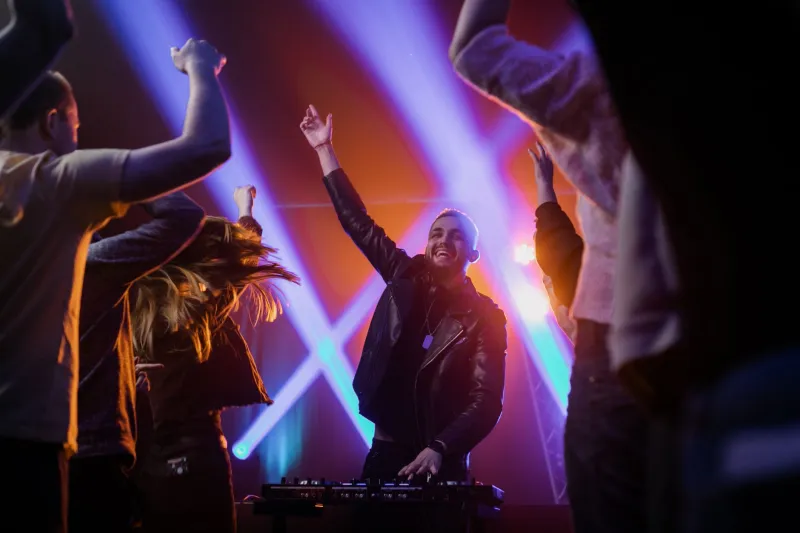
There's a moment every seasoned clubgoer knows — that electric second when a DJ drops something unexpected, something you haven't heard a thousand times already, and the whole room shifts. People look up from their drinks. Bodies move differently. That moment feels increasingly rare, and a lot of people in the nightlife industry will quietly tell you why: the algorithm got there first.
Streaming data has crept into the DJ booth in ways most casual listeners never think about. What's trending on Spotify, what's blowing up on Apple Music, what TikTok decided to make inescapable this week — all of it feeds into the decisions being made at the turntables of your city's most popular venues. The question worth asking is whether that's a problem, an inevitability, or just the newest chapter in a music culture that's always adapted.
The Numbers Don't Lie — But They Don't Always Tell the Whole Story
Club owners have never been shy about wanting packed rooms. But the metrics they're using to make booking and programming decisions have gotten a whole lot more sophisticated. Venue managers are increasingly asking DJs to pull from what's trending regionally on streaming platforms, treating chart performance as a kind of pre-approved crowd guarantee.
"I had a club owner literally send me a Spotify playlist and say, 'this is the energy we want,'" says Marcus T., a DJ who's been working rooms in the Southeast for over a decade. "Not a genre. Not a vibe. A playlist. With specific songs. I get it from a business standpoint, but that's not DJing — that's babysitting a queue."
The frustration is real, but it's also complicated. Streaming data isn't wrong, exactly. It reflects what people are actually listening to, what they're already emotionally connected to walking through the door. Club owners argue they're just meeting their audience where they are.
"We're running a business," explains one venue director who asked to remain anonymous. "If I know that three out of the top five songs people in this zip code streamed this week are from the same artist, I want my DJ to understand that context. That's not killing creativity — that's being smart."
When the Booth Becomes a Content Strategy
The tension gets sharper when you zoom out and look at how streaming platforms have trained listeners. Algorithmic recommendations don't just reflect taste — they shape it. People increasingly arrive at a club with deeply personalized, hyper-specific sonic expectations baked in by months of curated playlists. The result is a crowd that can feel fragmented, each person mentally comparing what they're hearing to their own private algorithm.
DJ Renata V., who runs a weekly residency at an East Coast warehouse venue, calls it "the playlist problem." "People aren't discovering music at clubs the way they used to," she says. "They're coming in having already decided what they want to feel. And if you take them somewhere unexpected, sometimes they don't follow — they just pull out their phone and check what song it is so they can add it to a playlist later. Which is actually kind of beautiful and kind of heartbreaking at the same time."
Music strategists — a role that barely existed fifteen years ago — are now part of the conversation at larger venues. These are professionals who analyze streaming data, social engagement, and regional listening trends to help clubs develop programming strategies. Some DJs see them as allies. Many see them as a threat.
"My job is to give the venue a competitive edge," says one music strategist based in the Midwest. "That might mean identifying a regional sound that's about to break nationally, or it might mean knowing that a certain demographic in this market streams afrobeats heavily but hasn't seen it programmed into their local club scene yet. That's not replacing the DJ — that's giving the DJ better tools."
The DJs Who Are Winning Anyway
Here's the thing nobody in the doom-and-gloom conversation wants to admit: some DJs are thriving precisely because of the data age, not in spite of it. The artists who've figured out how to use streaming insights as a jumping-off point — rather than a script — are building loyal followings and commanding serious residency fees.
"I look at what's trending, and then I ask myself what's adjacent to that," says DJ Kilo, who holds residencies at two of the highest-grossing clubs in his city. "If trap is dominant in the data, I'm thinking about what's in the DNA of trap that people haven't consciously connected yet. I'm using the algorithm as a map to find the roads that aren't on the map."
That approach requires genuine musical knowledge — the kind that can't be replicated by a streaming recommendation engine. And it's the thing that separates the DJs who are becoming artists from the ones who are becoming, as Marcus T. put it, babysitters.
What This Means for Your Night Out
For the average person heading out on a Saturday night, the algorithm-versus-artist debate might feel abstract. But it shapes your experience in very concrete ways — what you hear when you walk in, how long you stay on the floor, whether you leave feeling like you witnessed something or just attended something.
The clubs that are getting it right are the ones pairing data literacy with genuine creative trust. They're hiring DJs who understand both the numbers and the room, giving them the freedom to use one to transcend the other. The clubs that are getting it wrong are the ones treating their DJ like a human jukebox with a Spotify subscription.
Nightlife has always been about the unexpected. About the song you didn't know you needed until the bass hit. No algorithm has figured out how to manufacture that feeling yet — and the DJs who know how to create it are still the most valuable people in the room.
They just might have to fight a little harder to prove it.