Sunrise to Sunrise: One Full Day Inside Your City's Never-Sleeping Music and Nightlife World
Most people experience the city in daylight. The commute, the coffee shop, the lunch spot, the evening news. But there's another version of this place — one that starts warming up around the time the nine-to-fivers are winding down and doesn't fully exhale until the sun comes back up. We decided to stay awake for all of it.
What follows is a real-time chronicle of one full rotation — 24 hours in the life of a city that never quite stops moving, told through the voices of the people who make it run.
2:00 PM — The Soundcheck
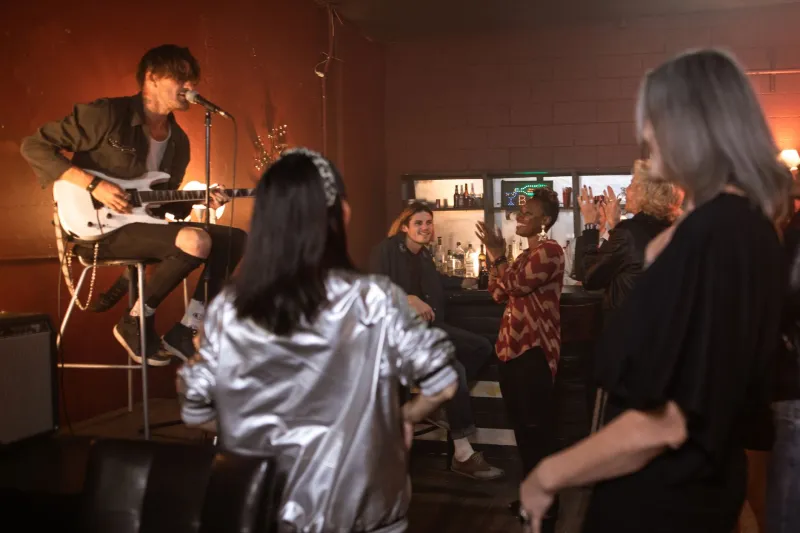
The day starts, oddly enough, in the middle of the afternoon. At a mid-sized music venue a few blocks off the main strip, a local band is running through their set for the third time. The drummer adjusts his hi-hat. The sound engineer makes a note on his laptop. Nobody is in a hurry. This is the unglamorous part of the night that audiences never see — the hours of preparation that make a two-hour show feel effortless.
"People think the show starts at 9," says the venue's head of production, shouting over a guitar run. "But for us, the show started at noon. Load-in, line check, soundcheck, dinner, reset. By the time the doors open, we've already worked a full shift."
This is the rhythm of the city's music ecosystem — a machine that requires enormous amounts of invisible labor to function. Behind every great show is a crew of people who spent the entire day making sure nothing goes wrong.
5:30 PM — The Pre-Game
Across town, the pre-game ritual is already underway. Groups of friends are meeting at bars near the venue district, comparing playlists, debating set times, arguing about which opening act is secretly better than the headliner. The energy is anticipatory — that specific electric charge that comes from knowing the night hasn't really started yet but it's close.
The bartenders at these early-evening spots are in their own zone. "The pre-show crowd is my favorite," admits one bartender who's been working the same corner bar for four years. "They're excited. They're generous. They're not drunk yet, so they're actually fun to talk to. The post-show crowd is a whole different situation."
She laughs. We don't ask her to elaborate.
8:00 PM — Doors Open
The line outside the venue has been forming since 7:45. A mix of longtime fans who've been following this particular artist for years and newer listeners who discovered them through a viral moment three weeks ago. Both groups are valid. Both groups are here.
The promoter who put the show together is stationed near the box office, watching the line with the practiced calm of someone who has done this many times but still hasn't fully stopped caring. "Every show feels like the first one in terms of nerves," he says. "You never know what's going to happen. That's the thing. You do all the work, and then it's out of your hands."
He checks his phone. The opener is already backstage. The night is about to begin.
10:15 PM — The Room Is Full
There is a specific moment in a live music experience — usually somewhere in the third or fourth song — when the room transforms. The individual anxieties and distractions of the people inside it dissolve into something collective. The music stops being background and becomes foreground. Everyone in the room is, for a few minutes, experiencing the same thing at the same time. In a world that has made that kind of shared experience increasingly rare, it hits different.
Tonight, that moment happens during a slow build in the headliner's set — a song that starts quiet and expands until the walls feel like they're breathing. The crowd, which had been politely attentive, becomes something more. People who came alone are suddenly surrounded by strangers who feel like friends. It's the kind of thing that's impossible to explain to someone who wasn't in the room.
This is why the city's live music scene matters. Not because of the economics or the cultural cachet. Because of moments like this one, happening in rooms all over the city, simultaneously, right now.
12:30 AM — The After
The show ends. The lights come up. The crowd spills into the street, and immediately the night fractures into a dozen different directions. Some people head home. Some migrate to the bars nearby. Some are already consulting their phones for the next thing — the late-night DJ set that starts at 1, the house party that someone just texted about, the rooftop situation that's been loosely organized through a chain of reposts.
The city's nightlife operates on an informal network of information. Who's playing where. Which bar is actually popping tonight versus which one is going to be dead by midnight. Where the after-party is. This intelligence moves through group chats and Instagram stories and the old-fashioned method of one person telling another person. The promoters and DJs who've mastered this network are the ones who consistently draw crowds. The ones who haven't are playing to empty rooms.
2:00 AM — The Club
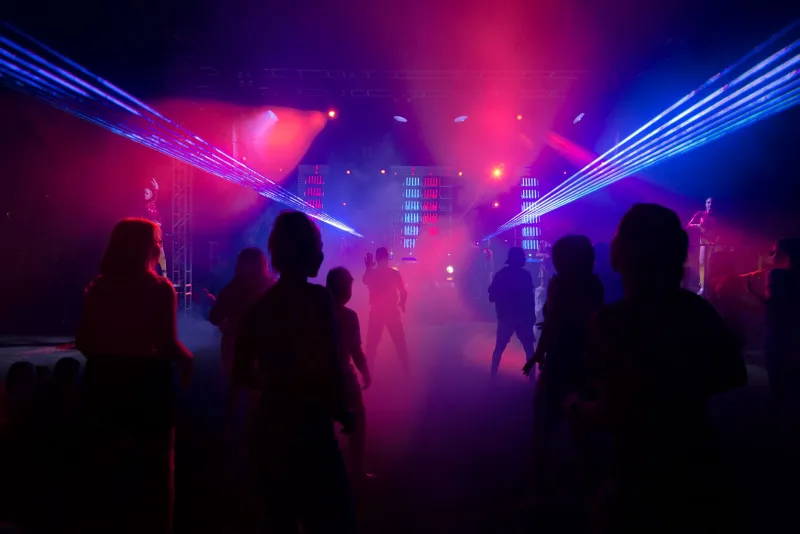
In the city's nightclub district, the night is just hitting its stride. The DJ booth is occupied by a local selector who's been building toward this moment for the last two hours — a careful, patient escalation of tempo and energy that has the floor moving with a kind of unified purpose. The lights pulse. The bass frequencies travel through the floor and up through your feet. Conversation becomes impossible and also unnecessary.
The club's promoter, who put together tonight's lineup, is working the room — greeting regulars, checking in with the DJ, keeping an eye on the vibe. "The best nights are the ones that feel organic," he says during a brief lull near the bar. "When the crowd and the DJ are really communicating, when the energy is building on itself — you can feel it. You can't manufacture it. It either happens or it doesn't."
Tonight, it's happening.
3:45 AM — The Night Shift Economy
Outside the clubs, a different economy is operating. The late-night food vendors who set up along the main strip are doing serious business. Taco trucks, hot dog carts, a beloved local tamale spot that only appears after midnight — these vendors are as much a part of the city's nocturnal culture as the music itself.
"My best hours are between 2 and 4 AM," says one food truck owner who's been working this corner for six years. "Everyone's hungry, everyone's in a good mood — mostly — and they want something real to eat. I feed this city after the city thinks it's asleep."
He hands over a wrapped sandwich to a group of four who just stumbled out of a nearby venue. They look delighted. It's a small transaction, but it's also a moment of community — a reminder that the night economy sustains real people and real livelihoods.
5:00 AM — The Last Ones Standing
The clubs are closing. The last DJs are packing up their gear. The bartenders are counting their tips and wiping down the counters. The security staff is doing final sweeps. The city is entering its quietest hour — that strange, still window between the end of the night and the beginning of the morning.
A small group of friends sits on a stoop a few blocks from the venue district, not quite ready to call it. They're talking about the show, about the DJ set, about a song that hit them just right at 3 AM. They're tired but not sleepy. The night has done what the best nights do — it's given them something to carry forward.
7:00 AM — The City Wakes Up (Again)
By the time the coffee shops open and the morning commuters start filling the sidewalks, the people who made last night happen are finally getting to sleep. The promoters, the bartenders, the DJs, the food vendors, the sound engineers — they're all horizontal somewhere, recharging for the next round.
And somewhere across town, a venue is already scheduling tomorrow's soundcheck.
The city never really stops. It just changes shifts.