Gone But Not Gone: How Closed Clubs Keep Coming Back to Life Through Tribute Nights and Pop-Ups
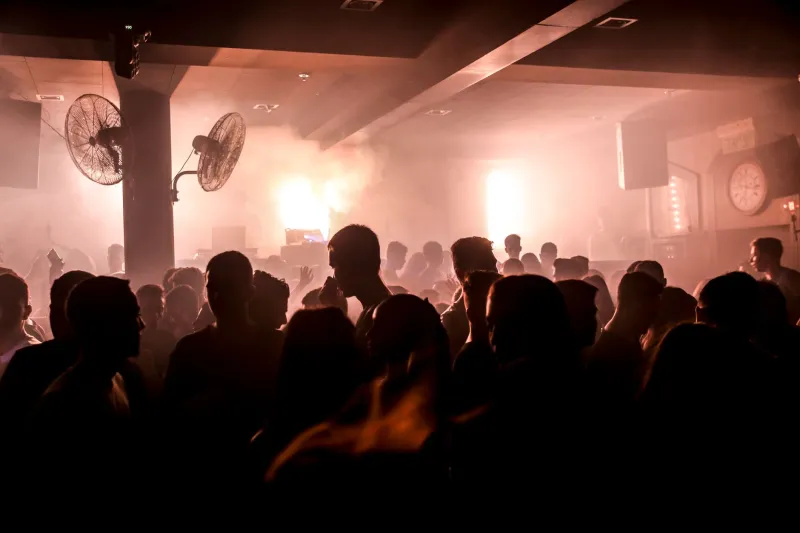
There's a particular kind of grief that hits when a venue closes. It's not like losing a person, but it's not entirely different either. You lose the smell of the place — that specific mix of old wood, spilled drinks, and decades of sound soaked into the walls. You lose the muscle memory of knowing exactly which step creaks near the back exit, or where to stand to feel the bass hit just right. And then one day there's a padlock on the door and a real estate sign in the window, and just like that, a chapter of your city's story gets shelved.
But here's the thing — a lot of cities aren't letting those chapters stay closed. From warehouse pop-ups in Detroit to rooftop tribute nights in Los Angeles, a growing movement of promoters, artists, and nostalgic fans is finding ways to resurrect the spirit of shuttered venues, even when the physical space is long gone. And the results are way more emotional — and more culturally revealing — than you might expect.
Why Venues Hit Different Than Other Losses
Ask anyone who was a regular at a spot that's now a luxury condo lobby, and they'll tell you the same thing: it wasn't just a building. Venues are where scenes get born. They're where a local rapper played their first real show, where a DJ first felt a crowd move in unison to something they mixed on the fly, where two strangers met and started a band that eventually put their whole neighborhood on the map.
The closure of an iconic venue creates a void that streaming playlists and Instagram archives simply can't fill. You can repost an old flyer all you want, but you can't repost the feeling of being in that room on a Friday night when everything clicked. That gap — between memory and experience — is exactly what tribute events are trying to bridge.
The Tribute Night Playbook
These events take a lot of different forms, and that variety says a lot about how different communities process loss. Some go full nostalgia: same DJs, same set lists, same drink specials, just transplanted into a new space. Others use the occasion to evolve the legacy — honoring the original vibe while pushing it forward with new artists who were influenced by what happened in that room years ago.
In cities like Chicago and New York, promoters have turned annual tribute nights into genuine cultural institutions. What started as a one-off sendoff for a closed club becomes a yearly ritual, drawing hundreds of people who want to reconnect — with the music, with each other, and with a version of their city that feels like it's slipping away. Some of these events even raise money for local music education or emerging artists, turning grief into something generative.
Then there are the pop-ups — scrappier, more spontaneous, and often more raw. Someone secures a warehouse or a rooftop or even a parking lot for a single night. Word spreads through group chats and Instagram stories. People show up not entirely sure what they're walking into, and somehow that uncertainty makes the whole thing feel more honest. There's no polished production. Just the shared understanding that this night is about something specific, something that mattered.
The Spaces That Host the Ghosts
One of the more fascinating parts of this whole phenomenon is where these tribute events actually land. Sometimes it's a space with a loose connection to the original — a venue owned by the same person, or located in the same neighborhood. Other times it's completely unrelated: a gallery space, a bar back room, a community center that clears out its folding chairs for one night.
The location almost becomes part of the statement. Holding a tribute to a club that got bulldozed for a high-rise in the lobby of that very high-rise? That's happened. It's uncomfortable, it's political, and it's exactly the kind of tension that makes these events feel like more than just a party. They become commentary. They say: we were here before you, and we're still here.
In some cases, the original venue's physical elements make a reappearance — a sound system that got auctioned off, a neon sign that a regular bought and kept in their garage, booth seating that ended up in someone's basement. These objects carry a kind of sacred weight. Seeing them in a new context is disorienting in the best way, like running into an old friend in a city where you didn't expect them.
What Artists Get Out of It
For the musicians and DJs who built their careers in these spaces, tribute events are complicated. There's joy in it — real, genuine joy in being back with a crowd that knew you when. But there's also something bittersweet about celebrating a room that no longer exists, especially when the reason it closed often comes down to money, development pressure, or the slow erosion of the kind of neighborhood that made the scene possible in the first place.
Still, a lot of artists show up. They show up because they feel a responsibility to the community that shaped them. They show up because it's a chance to play the songs that defined a specific era in a way that feels appropriate and intentional. And honestly? They show up because it's usually one of the best shows they'll play all year. The energy in those rooms is unmatched. Everyone there is invested in a way that a regular Friday night crowd just isn't.
The Emotional Architecture of Remembering
What these events really reveal is how emotionally tied a city's identity is to its physical spaces. We talk a lot about music scenes as if they exist in the abstract — as movements, sounds, aesthetics. But scenes live in places. They need walls and floors and stages and sound systems and bartenders who know your order. When those physical anchors disappear, the scene doesn't vanish, but it does become harder to locate. It becomes nomadic.
Tribute nights and pop-ups are a way of saying: we know we can't go back, but we're not ready to let go either. They're a form of collective memory-making, a way for a community to tell its own story on its own terms before that story gets rewritten by someone else's development plan.
And maybe that's the most important thing they do. In a city that's always changing — always tearing down and building up and pricing people out and moving on — these events create a pause. A moment where a room full of people can agree that something was real, that it mattered, and that it's worth remembering out loud.
So the next time you see a flyer for a tribute night to a spot you used to love, go. Even if it's in a weird location. Even if the sound system isn't quite right. Even if it makes you a little sad. That sadness is the point. It means the place meant something. And keeping that meaning alive, even imperfectly, even temporarily, is how a city holds onto its soul.