No Budget, No Problem: How Guerrilla Promoters Are Running Circles Around Established Venues
Photo: William Murphy from Dublin, Ireland, CC BY-SA 2.0, via Wikimedia Commons
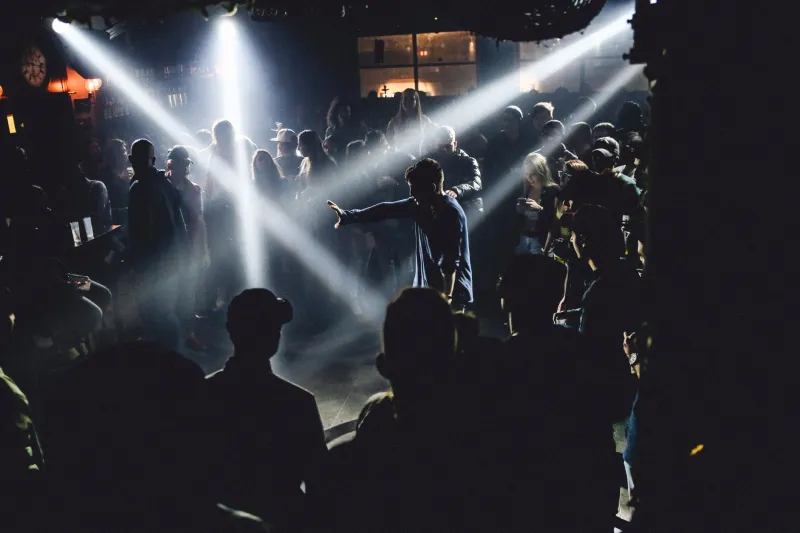
There's a show happening this weekend. You probably won't find it on Ticketmaster. The venue might not technically be a venue. The promoter is definitely running on four hours of sleep and a group chat with 200 people in it. And somehow — somehow — it's going to be the best night out in your city.
This is the reality of the underground event circuit right now. While established venues are still recovering from pandemic-era debt, battling rising insurance premiums, and arguing with booking agents over 15% cuts, a new class of DIY organizers has figured out a simpler formula: find a space, trust the community, and spend money on sound instead of overhead.
The results are speaking for themselves.
The Math That Makes It Work
Here's the thing nobody at a traditional venue wants to admit: the economics of DIY events are brutally efficient. A basement show with a $10 door charge and 80 people in attendance can net an artist more than a mid-size club gig with a 200-person capacity — once you strip out the bar minimums, the venue's cut, and the production markup that gets baked into every line of a standard venue contract.
Marcus Webb, a 26-year-old promoter who's been throwing events in converted warehouse spaces and art lofts for the past three years, breaks it down plainly. "The venue model is built around the bar," he says. "Everything else — the music, the lights, the DJ — that's just a reason to sell drinks. When I'm throwing a show, the music is the whole point. That changes what you're willing to fight for."
Webb's events run on a model that would make a traditional promoter nervous: no guaranteed minimums, sliding-scale door prices, and artists who get paid from the door first before anyone else sees a dollar. It sounds risky. It's actually the opposite.
"When artists know they're getting taken care of, they bring their people," he explains. "And when the people know they're supporting the artist directly, they show up. You build a feedback loop that doesn't depend on a venue's reputation."
Borrowed Spaces and Built Trust
The backbone of the underground scene isn't a single location — it's a rotating network of spaces that exist in a kind of semi-legal gray zone. Art galleries open their floors on off nights. Warehouses get sublet for a Saturday. Record shops push back the shelves. Rooftops get cleared out in the summer. None of these are traditional venues. All of them have hosted unforgettable shows.
What makes it work is trust — specifically, the kind of trust that takes years to build between an organizer and the people who own or manage these spaces. Nobody hands over their property to a stranger with a Spotify playlist and a dream. The promoters who've cracked the DIY circuit have usually spent years as attendees, volunteers, and supporters before they ever threw their own event.
Jasmine Okafor started promoting shows after years of working coat check and helping load in equipment for other organizers. "I knew every space in the city before I ever booked one," she says. "I knew which spots had noise complaints, which landlords were cool, which buildings had a loading dock. That knowledge is the real capital."
That community credibility translates directly into attendance. When Okafor announces a show, people don't need a Yelp review or a venue reputation to decide whether to come. They trust her curation. Full stop.
Why the Big Names Keep Showing Up Small
Here's the part that surprises people: it's not just emerging artists playing these underground events. Established acts — artists with real label deals, legitimate tour histories, and publicists who would probably cringe at the liability — are quietly sliding onto DIY lineups with increasing regularity.
Some of it is nostalgia. Playing a 75-person room after years of mid-size venues has a way of reminding artists why they started. Some of it is strategy — a low-key hometown set that generates social content without the pressure of a formal show. And some of it is just the vibe. These events have an energy that money can't manufacture.
"I've had artists pull up who had no business being in that room based on their streaming numbers," Webb laughs. "And they'll tell me after, 'That's the most fun I've had playing in two years.' Because nobody's checking their watch. Nobody's worried about the bar tab. People are just there."
The Risks Are Real — So Is the Reward
None of this is without risk. DIY events operate in a space where permits may be absent, fire codes may be stretched, and the whole operation depends on nothing going wrong. The community has had its tragedies — most promoters in the underground scene are acutely aware of what's at stake when they pack people into an unpermitted space.
The better organizers take this seriously. Okafor keeps a hard cap on attendance, no exceptions. Webb does a walkthrough of every new space with a focus on exits before he commits to a booking. Neither of them advertises exact addresses until the day of the show — a tactic that controls crowds and keeps the space off the radar of noise complaints.
"You have to earn the right to run events like this," Okafor says. "The trust the community gives you isn't free. If something goes wrong because you got greedy or careless, that's on you. That weight keeps you honest."
The Future of the Floor
What's emerging from all of this isn't just a collection of cool parties. It's an alternative infrastructure for live music — one that doesn't need a corporate parent company, a venue conglomerate, or a booking agency to function. The DIY circuit is developing its own booking networks, its own sound equipment rental pipelines, its own word-of-mouth marketing channels.
Some of these promoters will eventually move into traditional venues. Some already have, bringing their community-first ethos with them and quietly changing how those rooms operate. Others will stay underground by choice, because the intimacy is the product.
Either way, the message to established venues is getting louder: the people aren't waiting for you anymore. They found the side door, and it leads somewhere better.
Next time you see a flyer with no address on it, follow the instructions. Show up. Pay the door. You'll understand what all the noise is about.