Four People, One Van, and a Prayer: The Real Cost of Leaving Your City to Tour
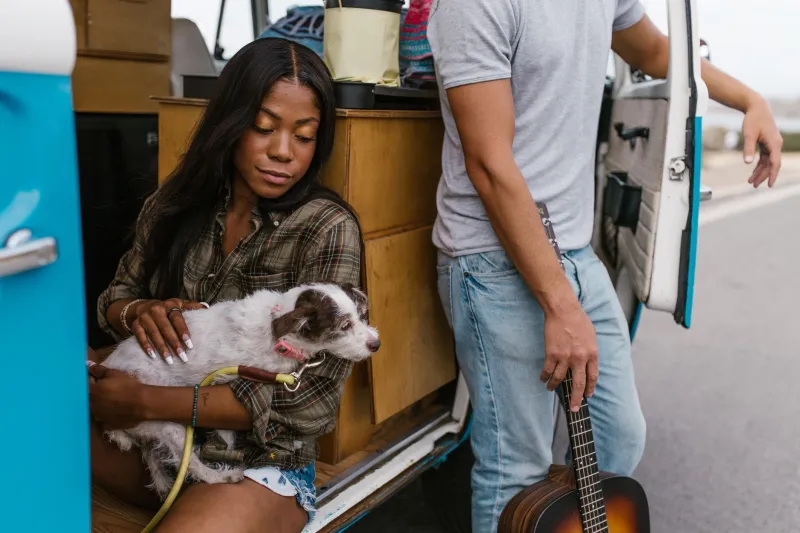
The romanticized version of the touring band goes something like this: load up the van, hit the highway, play your heart out in some sweaty room three states over, and come home with stories that become songs. The reality, for most emerging local acts, looks a lot more like a Google Sheet argument at 11 p.m. about whether anyone can cover the difference between what the show paid and what it cost to get there.
Touring has always been expensive. But for local bands trying to break beyond their home city, the math has gotten harder — and the gap between bands that can afford to leave and bands that can't is quietly reshaping which sounds make it out into the wider world.
What It Actually Costs to Hit the Road
Let's start with numbers, because the conversation almost never does.
The Hollow Frets, a four-piece indie rock band based in the city, agreed to walk us through the budget from their most recent regional run — eight shows across five states over ten days.
Van rental: $980. Gas: $620. Tolls and parking: $140. Lodging (a mix of floors, cheap motels, and one Airbnb split four ways): $510. Food: $380. Merch production they fronted before the run: $800. Gear repair mid-tour when their bassist's amp gave out on day five: $220. Total spend: approximately $3,650.
Total take from shows: $2,100 in guarantees, plus roughly $400 in merch sales. Total deficit: $1,150, split four ways, or about $287 per person — for ten days of work.
"We came home broke and exhausted and honestly kind of proud," says the band's guitarist. "But we also knew we couldn't do that again for a while. We had rent to figure out."
The Gear Problem Nobody Talks About
Every touring musician has a gear horror story. The amp that died. The pedal board that got soaked in a loading dock rainstorm. The drum kit that took a hit in the back of the van and never sounded right again. These aren't just inconveniences — they're financial events that can crater a tour budget in a single afternoon.
Local bands rarely carry the kind of equipment insurance that would cover road damage. The cost is prohibitive, and the assumption — usually wrong — is that nothing will go wrong. When something does, the repair or replacement comes out of whatever the band has on hand, which is often very little.
"We've had to cancel dates because of gear," says Priya, who manages a three-piece that's been trying to build a regional presence for two years. "Not because we didn't want to play, not because we weren't booked — because our PA blew and we couldn't afford to fix it before the shows."
This is a layer of financial risk that gets almost no attention in the broader conversation about what holds local artists back. Streaming numbers and social media reach dominate that conversation. But you can't stream your way through a broken amp on a Tuesday night in Knoxville.
Who Gets to Leave and Who Stays Stuck
Here's where the economics start to tell a story about more than just money.
Bands with access to family resources — parental help with van costs, a relative's credit card for emergencies, someone back home covering rent while they're away — can absorb the losses that come with early touring. Bands without that safety net face a much harder calculation. One bad run, one mechanical breakdown, one poorly attended show in a city that doesn't know them yet, and the whole experiment can collapse.
This creates a quiet but real divide in which acts actually build regional networks and which ones stay local by default. It's not always about talent. It's often about who has a cushion.
"The bands I see consistently touring are the ones where somebody has money behind them, whether that's their own savings or their family's," says one local promoter who books regional circuits. "The ones who are purely grinding it out — working jobs, saving slowly, trying to do it right — they're at a structural disadvantage from the jump."
The racial and class dimensions of this are worth naming directly. Bands made up of members from working-class backgrounds, or from communities that haven't historically had access to music industry infrastructure, are disproportionately the ones staying home. The regional touring circuit, which is supposed to be the entry-level path to a broader career, is gated by economics in ways the industry rarely acknowledges.
The DIY Workarounds That Actually Help
None of this means nobody's figuring it out. The local scene has developed its own ecosystem of workarounds, and some of them are genuinely clever.
Trade touring — where bands from different cities agree to book each other in their home markets — reduces costs and builds reciprocal audiences without requiring a full regional run. A band from your city plays a show in Atlanta for a band that's coming to play your city next month. Nobody's making money, but everybody's building a network.
Gear co-ops, where musicians pool resources to share equipment across tours, are gaining traction in several cities. The idea is simple: if four bands in your city all need a PA and none of them can afford to own one outright, maybe they own one together.
Crowdfunding tour budgets has become more normalized, though it comes with its own pressures. Bands that have cultivated genuinely engaged local followings can raise real money before a run. Bands that haven't yet built that audience are stuck asking the internet to fund a trip nobody's waiting for them to take.
What the Scene Owes Its Traveling Acts
There's a version of this conversation that puts all the responsibility on individual bands to figure out the finances. Work harder, save more, hustle the merch table. And look — that hustle is real and it matters.
But there's also a version that asks what the broader music ecosystem owes to emerging acts trying to grow. Venues that pay guarantees instead of just door splits. Promoters who factor in travel costs when booking regional acts. Local music organizations that offer micro-grants or low-interest loans specifically for touring support. Some cities have these things. Most don't.
The bands that make it out and come back with something — new fans, new collaborators, new sounds absorbed from other cities — make the local scene richer when they return. That's not just good for the individual band. It's good for everyone.
But right now, the van runs on gas, the amp runs on luck, and the spreadsheet runs on hope. For a lot of local acts, that's not a sustainable equation. And the music your city never gets to share with the world because of it is a loss that nobody's really measuring.