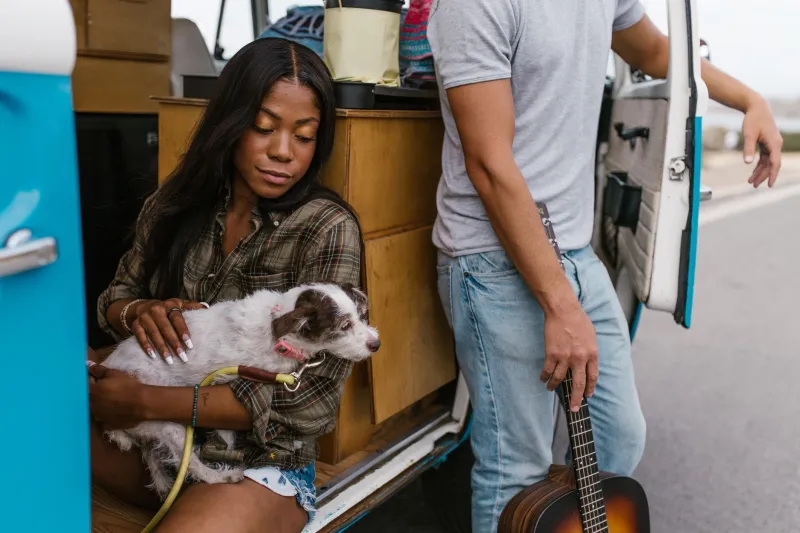
The Best Sound in Your City Isn't Coming From a Stage
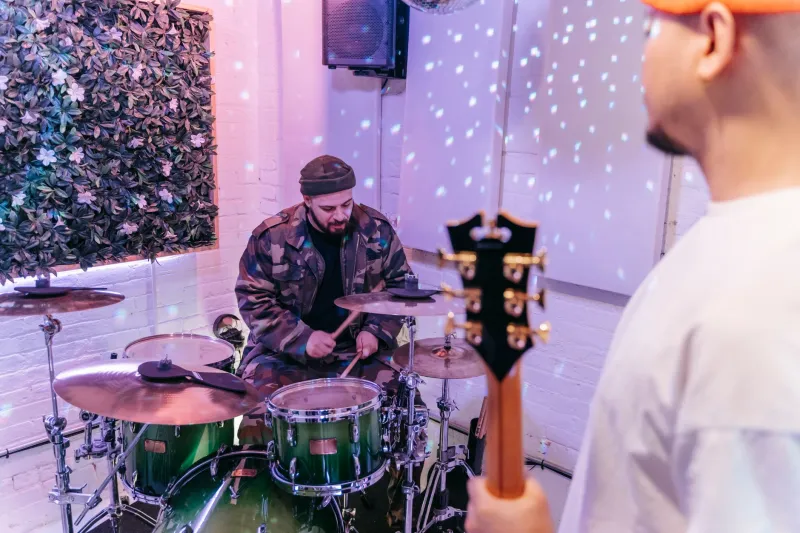
There's a warehouse on the east side that doesn't have a name on the door. It doesn't have a website. It doesn't have a booking email or an Instagram that posts show flyers. But on certain Friday nights, something is happening inside it that is more sonically adventurous than anything that's going to be on a proper stage anywhere in the city that weekend.
You probably haven't heard about it. That might actually be the point.
What Official Spaces Can't Hold
Venues have rules. Not just the posted ones about capacity and alcohol service — the unwritten ones that are just as real. A room with a reputation for hip-hop bookings has a sonic expectation attached to it before the first act even sets up. A bar that built its brand on indie rock sends a signal about what kind of experimentation is welcome and what kind will empty the room.
Those expectations aren't necessarily bad. They're how venues build audiences and how audiences find music they already know they like. But they create a ceiling — and a lot of the most interesting work being made in your city right now is happening above that ceiling, in spaces that don't have any expectations attached to them at all.
"When you're in a living room or a warehouse or somebody's backyard, there's no pressure to deliver a genre," says Kezia, a producer and multi-instrumentalist who's been running informal sessions out of a shared studio space for the past three years. "You can start something and let it go somewhere weird without worrying about whether the crowd is going to walk out."
That freedom to go somewhere weird is where new sounds come from. And right now, your city has more unofficial spaces generating that kind of freedom than most people realize.
The Living Room Session as Creative Laboratory
The house session is not a new idea. Nearly every significant musical movement in American history has a version of it — artists gathering in informal spaces to work out ideas that didn't have a venue yet. What's different now is the production quality that's become accessible at the consumer level. A decent interface, a laptop, and a pair of studio monitors can turn a bedroom into something that sounds remarkably close to a professional recording environment.
This has collapsed the distance between the experimental session and the finished product in ways that are still working themselves out. Artists who used to develop ideas informally and then bring them to a studio to be properly recorded are increasingly doing everything in the same space. The session is the record. The living room is the studio.
"I made my last project entirely in my apartment over like four months," says Darius, a rapper and beatmaker who's built a quiet but devoted local following. "Nobody heard any of it until it was done. No shows, no previews, nothing. I just needed to figure out what it was first."
That process — developing work completely outside of public-facing channels before releasing it — is increasingly common among artists who've watched peers rush unfinished ideas onto social media and lose control of the narrative around them. The unofficial space is also, in this sense, a protected space.
Cyphers, Collectives, and the Park Bench Remix
Not all of the unofficial innovation is happening indoors. Late-night park cyphers — the kind that start around midnight when the more scheduled parts of the evening have wound down — have long been a proving ground for rappers and beatboxers, but they've evolved. What you're as likely to find now is a more hybrid gathering: someone with a portable speaker running beats, a guitarist looping over them, a vocalist doing something that doesn't map neatly onto any existing genre.
These gatherings don't get reviewed. They don't get documented beyond whatever someone happens to capture on their phone. But they function as a real-time feedback mechanism for ideas that are still forming — and the artists who show up consistently to them tend to develop faster than the ones who only perform in formal settings.
"You learn things in a cypher you can't learn on a stage," says Marcus, a beatmaker who's been a fixture at one of the city's recurring late-night sessions for years. "On a stage, you're presenting. In a cypher, you're responding. Those are completely different skills and they make each other better."
DIY collectives operate in a similar register. These are loose affiliations of artists — often across genres, often across neighborhoods — who share resources, collaborate without formal agreements, and create their own infrastructure when the existing one doesn't serve them. A collective might share a rehearsal space, pool money for equipment, and put on their own events in borrowed venues without ever applying for a grant or registering as a nonprofit.
The lack of formal structure is often a feature, not a bug. It means decisions get made fast, experiments happen without committee approval, and the work stays close to the people making it.
Why Some of This Never Touches a Stage
Here's something that surprises people outside of these circles: a lot of the artists doing the most interesting work in unofficial spaces aren't necessarily trying to bring it to a traditional venue. Some of it is practical — the sounds being made don't fit neatly into a set, or the format is collaborative in a way that doesn't translate to a stage performance. But some of it is philosophical.
"The stage creates a certain relationship between the artist and the audience that I'm not always interested in," says Kezia. "There's a hierarchy to it. Someone performs, everyone else receives. In the spaces I work in, that line is blurry. People are contributing, reacting, changing what's happening in real time. You lose that the moment you put someone on a raised platform."
This is not anti-performance. It's a different theory of what music is for. And it's producing work that the official scene — with its bookings and its ticket sales and its algorithmic discovery — isn't really equipped to capture or categorize.
The City's Sound Is Bigger Than Its Venues
If you're mapping your city's music scene exclusively by what gets booked, what gets reviewed, and what shows up in the local press, you're looking at maybe half the picture on a generous day. The other half is in the unofficial spaces — the warehouses and living rooms and late-night parks — where artists are doing the work that doesn't have a home yet.
Some of it will eventually find its way to a stage. Some of it will get recorded and released and maybe blow up in ways nobody predicted. And some of it will stay exactly where it is — heard by fifty people, documented by nobody, and completely essential to the health of a creative ecosystem that needs spaces where the rules haven't been written yet.
The best thing you can do, if you care about what your city actually sounds like? Find those spaces. Show up. And let the music be strange for a while before you decide what to call it.