Signal Strong: The Local Radio Station That Became Your City's Most Trusted Voice
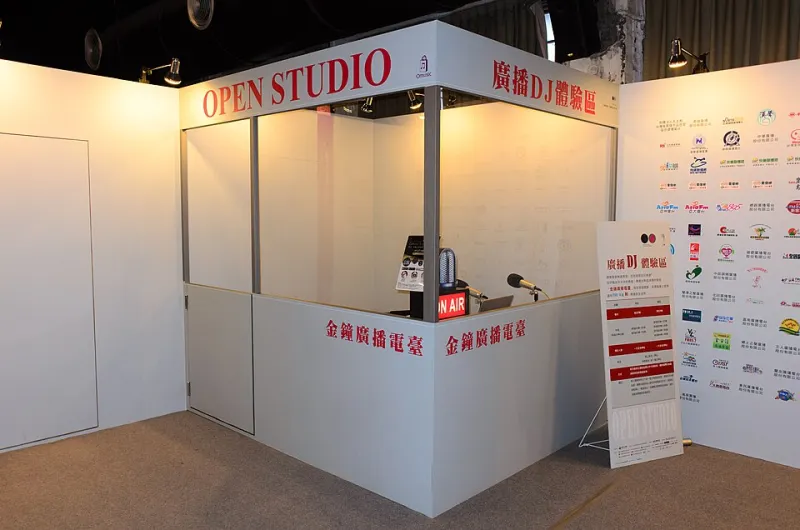
Photo: 玄史生, CC0, via Wikimedia Commons
Somewhere across town right now, a DJ is on air. Not a curated playlist. Not an auto-generated radio station based on your listening history. An actual person, in an actual room, spinning records and talking to your city like they know it — because they do.
This is local radio in 2025, and against every prediction made about its death, it's doing something remarkable: it's growing a cult.
The Algorithm Can't Love You Back
Let's be honest about what streaming platforms are good at. They're excellent at serving you more of what you already like. They're efficient, frictionless, and endlessly convenient. But there's something they fundamentally cannot do: care about your city.
Spotify doesn't know that the block on the east side just lost its last independent record store. Apple Music wasn't at the local showcase last Thursday when a 19-year-old from the neighborhood played her first real set and the room went completely still. The algorithm didn't feel that.
Your local radio station did.
This is the gap that independent and college broadcasters have quietly stepped into — not by competing with streaming on its own terms, but by doing something streaming structurally cannot: being from somewhere specific, caring about something local, and building an identity rooted in the community they broadcast to.
What "Hyperlocal" Actually Means
The phrase gets thrown around a lot, but at the stations that are genuinely thriving, hyperlocal programming isn't a marketing angle — it's an operating philosophy.
It means the morning show host knows which neighborhoods are being priced out and talks about it on air. It means the music director has a standing policy to preview at least two local artists per hour during peak listening windows. It means when a beloved venue closes, the station holds a tribute broadcast, not because it's good content, but because it's the right thing to do for the community.
DeAndre Collins has been music director at a college station in his city for six years. He came up as a listener, became a volunteer, and eventually took over programming with a single mandate he gave himself: "If someone from this city tunes in, they should hear something that sounds like home."
Under his direction, the station's local music rotation has expanded from a weekend specialty segment to a daily presence across every programming block. The results have been measurable. "Our listener engagement went up every time we leaned more local," Collins says. "People call in. They text the request line. They DM us on Instagram to say they heard an artist for the first time on our station and went and bought a ticket to their show. That feedback loop is what keeps us going."
The On-Air Personality Is Back
One of the more unexpected developments in local radio's revival is the return of the DJ as a genuine personality — not in the manufactured, morning-zoo sense, but as a trusted voice that listeners feel a real connection to.
Streaming killed the radio star, the story went. Turns out, it just cleared out the fakes.
The DJs building loyal audiences at local stations today are doing it through authenticity. They share opinions. They push back on mainstream narratives. They bring in artists for live sessions that feel like actual conversations, not promotional appearances. They remember the names of regular callers. They show up to the events they talk about on air.
Rachel Dominguez, a nighttime DJ at an independent FM station, describes her show as "a love letter to the city, broadcast at midnight." Her two-hour block has become appointment listening for a demographic that streaming companies have largely written off as unreachable through traditional radio.
"People my age were supposed to be done with radio," she says. "But what they're done with is radio that doesn't know them. What I'm doing is different. I know this city. I live here. I'm not reading from a playlist someone in a corporate office approved. I'm playing what I think you need to hear tonight, in this city, in this moment."
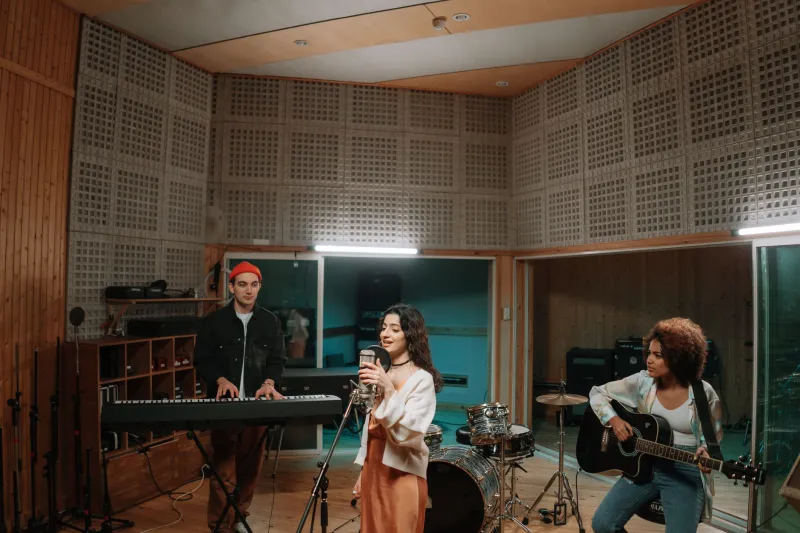
Her show regularly features live in-studio performances from local artists — not the polished press-release version of those artists, but the real version. The version that shows up with a guitar and a story.
The Live Session as Sacred Space
If there's one thing local radio does better than any streaming platform — better than a concert, even — it's the live in-studio session.
There's something about the intimacy of a radio performance that strips everything down. No stage production. No backing track. Just an artist, a microphone, and the knowledge that thousands of people are listening in real time. The pressure is different. The authenticity is different.
For local artists, a live session at a trusted station carries weight that a playlist placement can't match. It's an endorsement from a community institution. It signals to the city that you belong here — that the station, which the audience trusts, trusts you.
"Getting on [the station] felt more real than any streaming milestone I'd hit," says one local rapper who asked not to be named before his upcoming release. "My mom heard me on the radio. My old neighbors heard me. That's my city saying, 'We see you.' Spotify can't give me that."
Why the Cult Keeps Growing
The stations that are thriving aren't trying to be everything. They're not chasing national relevance or competing with major market stations on production value. They've doubled down on the one thing that can't be replicated at scale: belonging.
Listeners tune in because the station feels like an extension of their community. Because the DJ might shout out their neighborhood. Because the artist playing the 10 o'clock session is someone they went to high school with. Because when something big happens in the city — good or bad — they know the station will be there, on air, processing it with them.
That's not content. That's culture.
And in a moment when streaming platforms have made music more accessible than ever while somehow making it feel less meaningful, local radio has quietly become the most radical thing in the room.
Turn it on. Your city is talking.